Tampilkan postingan dengan label mora. Tampilkan semua postingan

Sabtu, 04 Oktober 2014

"Gondang Porang"


"Gondang" and "Porang
==================


CULTURE, for some reason, this is now  a few people who looked just as "art" of course, the term "seni budaya", they said. Yet according to the experts that anthropologists, culture is related to all aspects of human life (language, art, religion, subsistence systems, science, and so on), the form can be the idea (ideal form), activity (action), and physical culture. 

The elements of the culture, the other mutual fused (integrated) in total. It may occur because of cultural elements that have the same part that is something that can be integrated functionally intact among cultural elements. If in Mandailaing, all aspects of their lives based on the customary "Dalian Na Tolu" (the three main pedestal of "mora", "kahanggi", and "anak boru"), not MARGA (clans), be it in the "markobar" (deliberation), "marsaba-markobun" (agriculture), "margondang-marogung" (music and dance), "marbagas" (ceremonial wedding), "mambulungi" (ceremonial death), and so on. 

In simple terms "culture" that is roughly similar to the "car" that has wheels, tub, engine, brakes, persineling, driver, and so on. If for example the wheels or the driver does not exist, of course, "car" that can not move forward or backward. Approximately so too does "culture", it does not function optimally in the absence of the functional elements. 

In the development of a civilization that has lasted hundreds even reaching thousands of years, it could be an element of tribal culture (nation) another "entry" into the civilization/culture them, where "foreign culture" which makes it further experience with cultural acculturation who have been there before. 

It could happen "foreign culture" which makes it actually is not fully integrated with the "old culture" due to various factors, but the tribe/nation supporting it with a variety of cultural reasons, while recognizing and utilizing the "foreign culture" as their culture. Perhaps, in a relatively long period of time (a long process), they hope "foreign culture" that will eventually be established culture, which will be the same quality as the old cultures (native) them, so "absolutely" already seen an their culture intact (integrated) fully with others. 

It could be "yes", but it could be "no". Because there may be anthropologists/sociologists who find "foreign culture" which makes it look not so when integrated (merging) with the cultures of their others. As with percussion instruments such as the "drum" almost possessed by all tribes/nations in the world both in the West and in the East, where the terms of the shape is very varied. The question is whether the basic idea of making "drum" that comes from the West and then spread to the East, or otherwise from the East which then spread to the West, or in both the East and West have both been there "drum", but the tribes that use it as a percussion instrument tends to change the shape of "drum" and play rhythm patterns based on the uniqueness of their own culture, or perhaps copied from the tribe/other nations, is a "field research" is quite interesting in the disciplines of ethnomusicology (the study of music ethnic). 

Clearly, the existence of "drum" is once again proving that the various tribes/nations have been in contact with each other since thousands of years ago, either individually or in groups, such as the important events such as "war" in which "drum" played to give the spirit warriors to war, so in Mandailaing there is a special repertoire called "gondang porang". 

~o0o~


Kamis, 25 September 2014

tradisional ceremonial "mangupa"


The Challenges of Translating an Ethnic Ritual Text of Mandailing

By: Syahron Lubis
 Umar Mono

Linguistics Postgraduate Program
Universitas Sumatera Utara
ronlubis@yahoo.com


Abstract
The aim of the study was to show how to translate a cultural text of Mandailing: a ritual text recited at a wedding ceremony of the society, into English. Meaning-based translation method had been applied to translate the text called mangupa. Due to the vast linguistic differences between the source language (SL) (Mandailingnese) and the target language (TL) (English) a number of linguistically-related translation problems were encountered. And due to the great differences between SL cultures and TL cultures a number of culturally-related translation problems were found ranging from untranslatable items to items which could be translated literally into the TL but need explanation. Since the text did not only consist of prose text but also verses a various translation techniques must be used to translate the 37 verses in order to achieve not only meaning equivalents but also to create the rhymes of the translated verses. It was found that the structure of phrases, compound words and sentences in the SL and the TL were so different and thus caused translation problems. Subjects of sentences, numbers and conjunctions which were sometimes implicit in the SL must be made explicit in the translation. A certain word category in the SL might correspond to a different word category in the TL and thus they caused shift. Since the mangupa text is a classic text, there were many archaic words whose meanings were untranslatable. Since tenses do not exist in the SL they caused special translation problems to translate the text into the TL which has tenses. In order to achieve the rhymes of the translated verses, the following translation techniques must be used: transposition, addition, generalization, alteration, explication, modulation, concretization and transcreation.

Key words: source language/text, target language/text, equivalents, untranslatable, shifts, cultures

==========000==========


The relationship between language and culture is very close since language is part of the culture it self. Language and culture are even inseparable. Furthermore language is culture and culture is language. One cannot be understood unless the other is understood. When people communicate verbally and nonverbally their culture is embodied in their language (Kramsch, 1998: 3). The closeness of the relationship between language and culture is sometimes likened to the two sides of a single coin.

Translating is process of transferring not only the meanings of Source Language (SL) into Target Language (TL) but also the cultural meanings contained in the text being translated. If only the linguistic meanings of the Source Text (ST) which are transferred into the Target Text (TT) while the cultural meanings are ignored, the translation will only be acceptable linguistically but will be unacceptable culturally. Translating, for example a short English text: Julia mengawini (married) Tom, suaminya (her husband) sepuluh tahun yang lalu (ten years ago) is linguistically acceptable, but culturally unacceptable since in Indonesian culture men and women are not in an equal position in terms of marriage. It is a man who acts actively not a woman. Only by changing Julia as the object of the verb married or by changing the active sentence into passive, then the translation will be culturally acceptable in Indonesian culture.

English and Mandailingnese are two distinct languages genealogically, typologically as well as geographically. English belongs to Indo-European family, of Verb-Subject-Object (VSO) word order, spoken mainly in western countries like USA, Canada, Britain, Ireland (Crystal, 2001) by hundreds of millions of speakers who adopt individualistic culture. In contrast, Mandailingnese is an ethnic language of Indonesia that belongs to Austronesian family (Hartmann & Stork, 1972) of VOS (Verb-ObjectSubject) word order spoken only by a hundred thousand speakers in a small area of an eastern country who adopt collectivistic culture. Thus it is assumed that anyone who is translating English into Mandailingnese or from Mandailingnese into English must be faced with not only linguistic problems but cultural problems as well.


The purpose of study
The purpose of the study was to translate a text spoken by a skilled speaker to accompany part of Mandailingnese wedding ceremony called text of mangupa (TM) into English and to find out translation problems that may arise as linguistically and culturally affected by both distinctness of the SL and the TL and to find appropriate translation techniques to solve the problems so that the translation could be expected readable and acceptable for English readers.

Research Method
1. Data
The data (the text translated) was a written text of mangupa comprising 22 paragraphs and 37 verses. The mangupa ceremony was held in the groom’s house attended by members of dalihan na tolu, the host and the people having the same clan as his kahanggi, the side who gave the host wife, mora, and the side to whom the host gave wife, anak boru. Mangupa is mainly a ceremony of giving advice to a newly married couple. A skilled speaker gives the advice to the couple using things like cooked chicken, boiled eggs, salt, cooked rice etc as the symbols of the advice. For example, the yellow of the egg symbolizes gold. The married couple is advised to collect gold/wealth as much as possible. Thus a mangupa text is actually expressed orally but for the present study a written text (an oral text which had been transcribed into written form) was used because the written text is now available. And the suprasegmental elements contained in the oral form, in the writer’s opinion, are not so relevant to the purpose of the translation.

2. Translation Method
 As mentioned previously the text translated was one written in Mandailingnese and then translated into English. Both are very distinct languages. Thus, the type of the translation used belongs to inter-lingual translation. The ideal aim of translation of such type is to achieve a translation which is accurate (without intentionally losing some important information), readable (easy to read and understand) and acceptable (can be accepted by the readers because the translation has conformed to their cultural values). However such an ideal translation is not easy to achieve. A translation whose purpose is to render the meaning of the text being translated although the form of the translation is not similar to the form of the ST is what is claimed by Larson as idiomatic translation (Larson, 1984:16) or communicative translation by Newmark (1988 : 46). The idiomatic or communicative translation method has been done to translate the TM.

3. Translation Procedures
Since translation is commonly related to two aspects, i.e. the linguistic aspect and the cultural aspect, the first thing done was to compare the linguistic characteristics of English and Mandailingnese to see whether the two languages are different in all aspects or are only different in some important aspects. By knowing the differences of the SL and the TL translation problems could be anticipated. Second, the two cultures were also compared to see whether a translation of a sentence or an expression is acceptable linguistically but is unacceptable culturally. After the two aspects had been compared, then the ST was analyzed to see the genre of the text because a different text needs a different translation approach to 3translate it. Then the translation process passed through seven stops : 1) transfer of meaning of the ST to TT, 2) writing the first draft, 3) revising the first draft and then writing the second draft, 4) evaluating the second draft, 5) writing the third draft, 6) reevaluating the second draft and 7) writing the final draft. The translation procedures can be seen in the diagram below.

Translation Procedures

Translation evaluation was done by two people. The ST evaluation was done by an expert and a native speaker of Mandailingnese and the TT evaluation was done by an expert and a native speaker of English.

4. The Process of Translating TM and the Problems Encountered
The TM which consists of 22 paragraphs and 37 verses has been translated by the writer himself and the following is the description how the translation was done and what techniques had been used to solve the problems in order to achieve an accurate, readable and acceptable translation. Unfortunately due the limited space, the complete translation can not be included in this paper.

4.1 Problems Caused by Cultural Differences
The translation problems caused by the differences of SL and TL cultures have been distinguished into two, i.e. 1) untranslatable cultural terms and 2) literally translatable but culturally untranslatable. The terms dalian na tolu, kahanggi, anak boru, mora, harajaon, raja panusunan, uluan, and pantar paradaton are some of the terms used in the text which do not have equivalents in English and thus they are untranslatable. Let us see how they were left untranslated and their meanings must be explained.

Parjolo (first ) au (I) marsantabi (apologize) tu (to) barisan (row) ni (of) dalian na tolu, kahanggi, anak boru, mora songon i (as well as) tu (to) barisan (row) ni (of) harajaon, sumurung lobi (especially) tu (to) raja panusunan na (who) juguk (sit) di (on) uluan ni (of) pantar paradaton on (this).

Translation:
First of all I would like to apologize to dalihan na tolu, kahanggi, anak boru, mora as well as harajaon particularly to raja panusunan who are all now sitting on the uluan of this pantar paradaton. These cultural terms are untranslatable since equivalents of those words are not found in English. The term kahanggi refers to a group of people originating from the same ancestor.

Literally kahanggi means ‘brothers’. Anak boru refers to one or a group of people who has got a wife from the kahanggi and mora refers to one or a group of people from whom kahanggi has got a wife (wives).

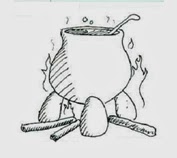
The three sides form a social relation called dalihan na tolu. Dalihan na tolu is a metaphor which literally means ‘fireplace made of three stones that supports a cooking pot’. Raja panusunan, means the first person (king) who established the village, uluan is part of the floor away from the entrance door of the traditional house which is regarded as a respected place, and pantar paradaton is a wide floor of the traditional house on which the event is held. Salleh (2006) when translating Hikayat Hang Tuah, a Malay classic text left some cultural terms untranslated like keris, raja, makan sirih. According to him they can be translated literally into dagger, king, and eating betel respectively but the cultural meanings contained in the words can not be translated. Teylanyo (2007: 30) also suggests that such terms should not be translated.

Some terms could be easily translated because the equivalents of the words are available in the TL but only the literal meaning that could be transferred while the cultural meanings could not be transferred. The word amang, inang and morsamtabli correspond to father, mother and to apologize in English. However amang and inang here do not refer to one’s father and one’s mother but to one’s son and daughter. English speakers do not call their son and daughter father and mother but in Mandailingnese kinship system one’s son is equal to his/her father and one’s daughter is equal to his/her mother. Thus one may call his/her grandfather (elder) brother and his/her grandmother (elder) sister (Nasution, 2005). Let us see how the two words are used in the two verses below.

Dijujar horambir poso
Mangihut saludang na tobang
Tinggalkon ma amang adat na poso
Madung sandang adat matobang

A young coconut falls down
An old stem is brought down
mang! Now leave a youth’s customs
On your shoulder now you are carrying a married man’s customs

Tal duskom ma giring-giring
Laho mamasukkon golang-golang
Tinggalkon ma inang adat ma bujing
Madung jujung adat matobang

Take off your jingling bracelets
When putting on your gold bracelets
Inang ! leave now the youth’s habits
On your head are now a married woman’s habits

The word marsantabi is equal to apologize but it is placed in the beginning of the speech before mistakes or errors in the speech are made. Again this is very culture–bound. In a Mandailingnese formal speech it is customary to apologize before saying something. This is contrary to English speakers’ habit who apologize for having done something wrong as seen in the first example above.

4.2 Problems Caused by Linguistic Differences
Since Mandailingnese and English belong to two unrelated languages, as a translator I expected that there must be many linguistic differences between the two languages and evidently five translation problems were found while translating the ST into the TT.

1) Since the SL and the TL differ in the structure of noun phrase, compound noun and sentence, it causes translation problems. In the SL, the modifier occurs after the head in both noun phrase and compound noun as in aek na lan as a noun phrase and dalihan na tolu as a compound noun which literally means ‘clear water’ and ‘the three stones’ respectively. In aek na lan aek ‘water’ is the head while na lan ‘clear’ is the modifier (in the SL an adjective is usually preceded by the particle na ‘which’). In dalihan na tolu again dalihan ‘fire place’ is the head while na tolu ‘three’ is the modifier. In the SL, typically, the subject occurs after the verb when the verb is intransitive as in Sayur badan do hot tondi literally ‘body and soul get older’ or in martamba denggan paruntungan literally ‘fortune gets better’ where badan do hot tondi and paruntungan are subject while sayur and martamba denggan are verbs. When the verb is transitive, the sentence pattern is verb–object –subject as in Pamilas aek inang where pamilas ‘boil’ is a transitive verb, aek ‘water’ is the object of the verb and inang ‘mother’ is the subject. In English the typical pattern of sentence is S–V–O as in mother boils water.

2) The subject of sentences, number and conjunctions are sometimes not expressed explicitly in the ST while in the TL they are always shown explicitly. In sada panginuman sada perbasuan which literally means ‘one place for a drink and one place for washing hand’ there is no conjunction between the two phrases. Similarly there is no conjunction in tubuan anak nian tubuan boru which literally means ‘get sons and get daughters’ but in TT they are 7usually shown explicitly as in ‘a glass and a bowl’ and ‘baby-boys and baby-girls be born’ respectively.

In harani rumbuk hita satahi ‘because we are intimate, we are in agreement’ the subject of the first sentence does not appear. When the subject (hita) appears it will become harani hita rumbuk, hita satahi. So in the translation the subject has been added as in since we are intimatewe are always in harmony. In muda marjagal bahat mandapot untung which literally means ‘when selling get much profit’ there is no explicit subject but it is understood from the context that the subject must be the addressees, that is ho ‘you’ or hamu ‘you–all’ because the addressees are both the bride and the groom. In the translation the subject had been added as in when selling things you may make much gain.

3). A phrase in the ST may correspond to a clause in the TL and one word category in the ST may shift to a different word category in the ST. Di hanaek ni mata ni ari ‘at sunrise’ is a phrase but it needs to be translated into a clause in order to make it longer so that it matches the next sentence because it is part of a verse as in while the sun is beginning to rise, it is the time for luck and nobility to rise. The word lungun-lungunan ‘lonely’ is an adjective but it shifts to a noun (loneliness) in order to help make a good rhyme as in Yearning for his experiences in the past May his loneliness be released.

4). English has tense while Mandailingnese does not. This may cause translation problems especially when the translator does not pay much attention to non-linguistic context in which an utterance of the ST is used. Let us see the example below.

Ari (day) on (this) ari (day) na (particle) denggan (good) ari (day) na (particle) uli (beautiful), ari (day) na (particle) tupa (right) ari (day) na (particle) niligi (see) ni (of) bayo datu (headman) di (at) hanaek (rise) ni (of) mata ni ari (sun), diupa (advised) tondi (spirit) badan (body) muyu (your) anso (so that) manaek (climb) tua (luch) hamamora (nobility) ,

In this sentence there is no a word that is referring so the time explicitly in which the action is done except the adverbial phrase ari on ‘this day’. But since the mangupa ceremony is habitually performed while the sun is rising (at about 9 to 11 am) so in the translation the progressive tense, simple present tense and future tense were used as seen below.

It is a good day, a lovely day, the right day, the day which has been examined by the bayo datu (headman), When the sun is rising, your spirit and body diupa (being advised) so that your luck and nobility will rise.

5). Mangupa text is a classic text so that many old words or even archaic words are still used. Younger people normally do not understand most of the archaic words while older people are no longer available and there is no a dictionary of archaic words. Since their meanings are unknown many archaic words were left untranslated especially in the translation of the verses. However, when translating verses the translator is allowed to replace the archaic words with new words as long as the basic meaning of the verse can be conveyed. (Newmark, 1988, Salleh, 2006. Chan, 2003). So some archaic words had been replaced and some had been left untranslated. Some of the archaic words used in the MT are omas si gumorsing, rambe-rambe lai-lai, sangap, si maradang tua, juhut gana-ganaan, tulan rincan , longa tinungtung, sinta-sinta, andalado, pulik.

4.3 Translating Poetry
Known as pantun in Indonesian literature, this traditional poetric form consists of two couplets; the first suggests the second by sound or other similarity (Echols and Shadily, 1989: 409). Pantun is very popular in Indonesia because of the beauty of its language. It is a means of expressing feelings through a special form of language which has musical rhythm (Chan, 2003: 1). Poetry does not only have semantic function and aesthetic form but is also used as a means of arousing feeling and produce emotional effect (Connolly, 1998: 176).

Translating a poetic text is more difficult than translating a prose text because the translator’s task is not only to convey the meaning but also to achieve rhyming form. And although much poetic nuance can not be transferred, and the forms of the poem can be restructured, the translated poem may be better than the original (Dastjerdi, 2004).

The following is the account of translating the 37 poems in the TM. A number of techniques were applied to translate the poems. Some poems could be translated literally without difficulties but in translating the other poems certain techniques of translation were applied. The adverbial phrase di hanaek ni mata ni ari, was translated into when the sun is beginning to rise which is a clause. The reasons are it sounds better than at sun rise and also to make it match in length with the next line (It is the time for luck and nobility to rise). So transposition technique had been applied. In harani rumbuk, hita satahi there is no subject in the first clause. If there is a subject it would be harani hita rumbuk, hita satahi. In the translation the subject had been added (since we are intimate, we are always in harmony) because a sentence without a subject is not common in English. Thus the technique of addition had been applied.

The imperative sentence ulang sirang literally can be translated into Don’t get divorced but it was translated generically into Avoid argument so that a good rhyme could be achieved with the previous sentence which sounds Don’t hesitate to make agreement. So the technique of generalization had been 9adopted. When tumbuk dapot na ni roha in the last line is translated literally it will become so that what is in heart can be achieved but the literal translation was not done; if it was done so, the translation will not match in rhyme with the second line (May your destiny become better). So using alteration technique it was translated into to achieve your aim and desire. By doing so, meaning was not distorted and a good rhyme could be achieved.

When these two lines:

 Halaklahi si suan bulu
 Dadaboru si suan pandan

are translated literally, they will become

A boy is a bamboo-grower
A girl is a pandanus-grower

Without indication of tense.
But in the translation the two lines were translated to :

 A boy will be a bamboo-grower
 A girl will be a pandanus-grower

adding will be to make them future tense. It was done in order to make the tense of the two lines explicit because the previous lines indicate a hope in the future: when the bride and groom have descendants. Thus technique of explication had been used.

Nipasae tanding duru is a passive sentence which means ‘the edge of the cultivation is cleared’. The line was changed into imperative and simultaneously edge was changed to shrub so that it became clear up the shrub from the cultivation. The second line anso santak nida tu ipar which literally means ‘so that the distance can be seen’ had been translated into so that the view is clear.

Thus at the same time the technique of transposition, alteration and modulation had been applied in order to achieve good rhyme.

When gogo hamu sumbayang is translated literally it becomes diligently you pray but it was translated into may you perform the daily five prayers in order to achieve good rhyme with the following lines (may you become a hajj fulfilling one of the Moslem’s pillars) although a hajj is actually not the equivalent of rukun na lima in the previous line. Rukun na lima is equal to the fifth pillar (of Moslem). But it was not done so because the fifth pillar is too generic and the English readers may not be familiar with the term. Thus by applying technique of concretization (Moentaha, 2006 : 62) it was then translated into become a hajj, the term which is more specific and popular even for non–Moslem readers.

When bariba tor bariba rura of the first line is translated literally it becomes across the mountain, across the river but it had been translated into the rivers flow through the valley changing the whole sentence to a totally new sentence in order to achieve a good rhyme with the next line (they gather at the estuary). The technique of changing the whole form, (transcreation) according to Chan (2003: 15) may be used in translating verses in order to achieve good rhyme as long as the important message/meaning of the verse is not distorted.


Conclusions

It is now evident that in translating a culture text a translator will not only be faced with linguistic problems but also cultural problems as what the translator experienced when translating the cultural text from Mandailing. The problems range from simple linguistic and cultural problems to complicated ones such as adding a new element to the TT and replacing the whole form with a new form to make the translation sound better and more readable.

Five linguistic problems were encountered when translating the prose text, that is 1) the problem of translating noun phrases, compound nouns and sentences, 2) the problems of translating subjects of sentences, number and conjunctions, 3) the problem of translating phrases and words (shifts may occur), 4) the problem of translating a linguistic form without tense to a linguistic form with tense, and 5) the problem of understanding the meaning of archaic words in a situation where there were no dictionaries and also no informants who know the meanings of the words.

In translating the verses a number of translation techniques have been applied. The techniques applied were addition, generalization, alteration, explication, transposition, modulation, concretization, and transcreation. The various techniques were used because of the nature of the text being translated, that is, a poetic text.


References
Chan, Sheung Wai (Sherry). (2003). Some crucial issues on the translation of poetic discourse from Chinese to English. In Gema Online Journal of Languge Studies, Vol.3 (2), pp.1-23.
Connolly, David. (1998). Poetry translation. In Routledge Encyclopedia of Translation Studies. Mona Baker and Kirsten Malmkjaer, eds. London: Routledge.
Crystal, David. (2001). English as a Global Language. Cambridge: Cambridge University Press. Dastjerdi, Hossein Vahid. (2004). Translation of poetry: Sa’di’s Oneness of Mankind Revisited’. In Literary Translation, Vol. 8, No.4.
Echols, John M. and Hassan Shadily. (1989). An Indonesian-English Dictionary. Jakarta: Gramedia.
Hartmann, R.R.K & F.C. Stork. (1972). Dictionary of Language and Linguistics. London: Applied Science Publishers.
Kramsch, Claire. (1998). Language and Culture. Oxford: Oxford University Press.
Larson, M.L. (1984). Meaning-Based Translation: A Guide to Cross Language Equivalence. London: University Press of America
Moentaha, Salihen. (2006). Bahasa dan Terjemahan: Language and Translation the New Millennium Publication. Jakarta: Kesasint Blanc.
Nasution, Pandapotan. (2005). Adat Budaya Mandailing dalam Tantangan Zaman. Medan: Forkala.
Newmark, Peter. (1988). A Textbook of Translation. New York: Prentice Hall.
Salleh, Muhammad. (2006). A Malay knight speaks the whiteman’s tongue: notes on translating the Hikayat Hangtuah. In Indonesia and the Malay World, Vol. 34, No. 100 November 2006, pp. 395 – 405.
Teilanjo, Diri I. (2007). “Culture in Translation: The Example of J.P. Clark’s in The Ozidi Saga, Babel, 53:1 (2007) 1-21.

~o0o~

Selasa, 16 September 2014

Clan issues


"'MARGA' ISSUES IN MANDAILING SOCIETY" 


WHY to be a problem of the existence of our thinking "marga" (clan) in Mandailaing society? It happens because there are enough people who do not write Mandailaing "surname" individual behind the name. What is the reason? Indeed, the reason it is as yet unclear, sahinggo finally I (the author) asked one friend (the Mandailing but live in neighboring countries, and he was one who did not write "surname" behind his name. In this case, he did not give an adequate explanation about it. it only gives information on the country that is more than half the people who live in the country Mandailaing not make "surnames" (like Nasution, Lubis, Rangkuti, Parinduri, Daulae, Batubara, and so on) behind their name. this is more or less the same tendency in Indonesia. thereby, of course we should be asking myself (and thinking): why? 

Had previously verbally explained that, if a man marry (called "marbagas" or "maringanan") in Mandailing will be given by the-relative certain degree, the so-called "goar harajaon" or "goar matobang" from "name of the grandfather" (called "ompung") of our own, but the name of our grandfather was none of his clan, which was the name ("goar harajaon") that must be worn as the official name after she marries implementation a traditional wedding ceremony. titles given name was usually specific to each clan, for example, are like "Jasinaloan", "Jagunung", "Japarlaungan", "Japarlagutan", and so on to be worn until the end of his life. however, it often happens that the name given to the traditional wedding ceremony was not formally used are like in the implementation of traditional ceremonies or rites (diseut "orja", which is called joy "siriaon", while the nature of grief called "siluluton"). Things like this do not seem to be an important issue for people Mandailaing, so ttidak ever have problems with such events (men who have customarily married but after marriage she was not wearing a "goar harajaoon" or "goar matobang"). 


But when viewed from the other side, for example, that there are thoughts (ideas) with respect to the other, such as the emergence of a strong suspicion in our minds that that buduya clan was actually characterized not indigenous or native culture Mandailaing people. Having done a traditional wedding ceremony, rarely "goar harajaon" was used so for example, when formally ceremonial or rites performed in Mandailing. Many examples, such as peer colleagues to do so, including compatriot brothers were educated and people pretty much know the customs of society Mandailing. Apparently they use constantly is "goar ni daganak" (the name of the new children are born), even though they would have received "goar harajaon" in a traditional wedding ceremony. 

If observations from one side, there is likely clan in Mandailing it's actually not indigenous or "native culture" Mandailaing people, because clan this seems unlikely harmony or harmonious with the cultural elements of other Mandailaing in totality, where the custom as a culture systems are generally not separated from each other (integrated). For example, let's take a look at the customs or culture related Mandailing eye system mengerjkan attau manage rice crop in the fields that they are no custom called "marsialap ari" (alternately working the fields others are joined together). In the tradition of "marsialap ari" can actually be carried out not as the determining factor is the "clan", but because they reside in the same settlements as "banjar" (in Mandailing there are 4 settlements began the smallest is the "banjar", greater than the "banjar" is "pagaran", bigger than "pagaran" is "lumban", and the last is the biggest "huta" or "banua"). Residents who live in the "banjar" it "markoum-koum" (the existence of kinship because of marital relationships) and many clans are different in the settlement ("banjo") they were, not only inhabited by the "clan" only, but many clans in Mandailing Tradition "marsialap ari" can not be done if only by a group of people who "samarga" (the offspring) are in a place of settlement, because if the work is done by people who "samarga" course called "sabagas", "saompung", and the "sakahanggi" ("sisokot"). Precisely, because kinship by marital relationship that (not blood relations "samarga") which became the basis of the implementation of culture "marsialap ari", so the tradition of "marsialap ari" was done is because they are one the settlement ("sabanjar ') that" markoum-koum ", not because they are "marsisolkot" (the offspring). 

So also in the case of "margondang" or even "manotor" there is no clear relation to the clan. It seems clear that based on the names of the repertoire (music composition) of "tortor", "gondang", and "gordang". For example, "tortor naposo nauli bulung", "tortor namorapule", "tortor namora-mora", "tortor anak boru", "tortor suhut", and so it seems more closely related to social status (kinship system, not a clan). The proof there is no "tortor nasution". "tortor Lubis", "tortor matondang", and the like. Although some say that the clan is crucial as "identity", but instead of the most proven evidence, namely "saro" (language), "language indicating the nation" where it is clear that language as a tribal identity, not a clan. While the music cultures are like "gordang sambilan" can indeed be used as "identity when necessary. Related another thing, as Huta Godang as a place of settlement in Mandailaing Julu make "fruit" as their identity is "kantang tanagodang "(potatoes), and Maga which is also a residential place in Mandailaing Julu with "unte manis" (sweet orange"). Back to the problem of art-culture, at least "panjeir" (singer jeir) often mentions her children woman Lubis clan being "manortor". The example was his "manis-manis" (sweet), or girls Nasution clan being "manortor" was also pretty ones. Such a phrase contained in the lyrics of his song. So, which is why it can be said that the clan was not the "original culture" Mandailaing people, even clan that has existed for hundreds of years to exist in Mandailing. 

Start author of school graduated from childhood to senior secondary (SMA 108) living in Kotanopan (Mandailaing Julu). After graduating high school 108 Kotanopan, because the community in Medan has been studied at the Faculty of Letters, University of Sumatera Utara (USU), especially in ethnomusicology courses, and after mating with a woman bleed Java (East), then society in Jakarta with many people Mandailaing. Actually, quite a lot of work that is closely related to the well in the village of indigenous Mandailaing halamann, in Medan and Jakarta. But not entirely be done properly because there is often a "problem" with the issue of "clan" in a society that Mandailaing in three places, so often told friends in Mandailaing language: "Angkentong ... patunda Alak na ni sian ahaan dei ..., kasidunggan nga tarpature be denggan karejontaon! Approximately like that's what happened, which is closely associated with problem-problems of clan. From it all again I say that the clan was not the original culture Mandailaing people. Precisely klau viewed from one side, clan that is one of the factors that hinder the progress of society itself Mandailaing, thus it true? That is why it is very necessary for us to discuss together! 
So if the clan was not the original culture Mandailaing people, why clan already exists in Mandailaing until several generations (berratus-hundred years) ? Hall was probably due to several things happen. First, customs or culture clan that brought people to Mandailaing, but not known for certain who the person who took it. Tradition clan was likely origin of the tribe or foreign nation. So the clan when it might be something like "the longer trend models". Because there are other tribes who have been clans, which is pretty great anyway they see people who have a clan it, so that they (the Mandailaing) would want to have a clan also make it look "similar" with other tribes who have been clan. When in fact if they are observant enough, the actual clan was not suitable (not in harmony) with the correct customs or culture of their existing first (custom nature as a system that has been integrated as a whole). However, because they had looked tribes Together with clan was "terrific" once, so they were eager to have a clan. Second, the clan in Mandailaing it more or less like any "coercion" of a group of immigrants. Culture clan is applied on the grounds it would be easier to regulate and foster the Mandailaing after got clan. Because on the basis of their knowledge, if the clan has been applied to the Mandailaing, then it must be easier to regulate and direct the people Mandailaing because it is rather "stubborn". Such knowledge of the immigrants, if the clan has been applied to the Mandailaing community, they confidence, will be much easier to organize and promote the Mandailaing. Fact, they may not actually have a lot of knowledge about the culture of clan, whether the clan that harmoniously (harmonious) correctly with the cultural elements Mandailaing or just the opposite, they actually do not know exactly! How it, they themselves were actually learning new customs (culture) in his own country, and also learn a new culture of other tribes. Clearly, they might actually not understand well the "ins and outs" of indigenous or tribal cultures they visit it, including tribal Mandailaing. Third, there may be a form of "engineered" to particular interests, we do not know. And probably many more other interests, but now can not be described. If there is a chance later looser, maybe we can connect an explanation on this issue. So it must be stressed once again, that the clan was not the original culture Mandailaing people, because no appropriate (not in harmony) with elements of other Mandailaing culture, which, as we know that it tends to customs or culture is a unified whole and integrated total. 

It is certain there are people (Mandailaing) who does not agree with the author in connection with the problem of clan of this, all the more so because of the existence of clan has lived for hundreds of years in Mandailing. So perhaps there who think: "Ah, mana mungkin itu, karena ‘marga’ itu sudah menjadi identitas yang sudah ratusan tahun lamanya bagi orang Mandailing !!!"  Indeed, but as already explained that the issue of culture clan is not appropriate (not in harmony) with elements of other Mandailaing culture, and there is a possibility (the downside) that the existence of clan itself to be one of the factors inhibiting the progress of society Mandailaing itself. Due to the nature of the clan was personal (individual). But otherwise when the customary "Dalian Na Tolu" ("markoum-sisolkot"), such as Mora, Kahanggi, and Anak Boru, the functional nature. That is, if the man has a position and function as Mora, Kahanggi, and Anak Boru must automatically. both in ordinary life and in day-to-day implementation of traditional ceremonies and rites ("orja") berifat "siriaon" or even "siluluton", he (the man) has had duties and responsibilities in life community ("markoum-sisolkot"). Because in essence, though not optimal very low) the ability of a person in the tradition of "markoum-sisolkot", but he still has a role and function of the socio-cultural life in order as Mora, Kahannggi, and Anak Boru. Whereas the clan more supporters are personal and only consists of a kinship system, namely "kahanggi" or "sisokot", which is not so great influence in the customary "markoum-sisolkot." On the other hand, social status (Dalian Na Tolu) was supported by three groups of kinship (Mora, Kahanggi, and Anak Boru), where each person Mandailaing equally as well have the position and function of all three (Mora, Kahanggi, and Anak Boru) in the context of traditional ceremonies ("orja") which held by "suhut "(executive orja) are different though. But clearly, everyone Mandailaing in social life ("markoum-sisolkot"), because they adhere to the social system of Dalian Na Tolu, certainly serves as Mora, Kahanggi, and Anak Boru (all three). 

When term of layered-lapisnya culture /civilization that once existed in Mandailaing, like in the stone age inhabitants is Leso, Langkeso, etc., until the existence of Alak Siladang in Mandailaing Godang (Panyabungan) and alak Ulu in Mandailaing Julu (Muara Sipongi) is quite clear there is no clan when it was, but after the arrival of Alak Koling (Tamil Nation of South India) which many build their worship centers (Hindu-Buddhist) is "Mandala Holing" and the influence of Islam so that they are the majority ultimately even become devout followers, while in the lives of people (occupants) previously was with the belief system that anamisme-dynamism "Sipelebegu", the worship of various kinds that they view as sacred as "Begu" (ancestral spirits), tor (hill small), batang aek (river), guo-guo (caves), and so on, which at that time also there is no clan, that there is a variety of custom traditional. Culture related to "old religion" (Sipelebegu) as Etek, Gondang Boru, Tortor, Gondang Dua, Gordang Sambilan, Gordang Lima, and so on as an important part daro rites (rituals), which was still in existence until now, which may be supported by the existence of a" the new concept of too ie "ombar do adat dohot ibadat". 

Thus, there was a time it was customary or cultural change, even some that are already "dead", as the music culture "tulia" played in the tradition dating young Mandailaing formerly the "markusip" (see Edi Nasution, Tulila: Muzik Bujukan Mandailing, Penang-Malayasiia: Areca Books, 2007). That happens because as the owner of the indigenous peoples (cultures) it also has changed, with the understanding that the essence of the culture was actually "change" itself because it is definitely going to happen. 

In please do not let anyone misunderstand, that possibility once "clan" it is a culture that is very suitable and also very useful for other tribes, but according to the results of observations (including empirical experience), clan is not suitable for ethnic groups Mandailaing as clan was not harmonious (integrated) with the elements of their kebudadayan others, such as oriented to the ideals of "progress together" (public interest). Once again dihaharap we do not misunderstand the issue of clan, because all the thoughts that had been poured just limited to this "discussion" that I think are quite interesting. 

One alternative solution to the problem of clan "in Mandailaing probably a (man) can continue to use the name" clan "in back his name until he was legally obtained "goar harajaon"("goar matobang") after mating ("marbagas"), and after "marbagas" so that he should still be (mandatory) wearing "goar harajaon" instead of "goar ni daganak" (behalf of the children). Together with the "clan", or there is another better solution


~o0o~


Minggu, 09 Februari 2014

Mandailing Culture (4)

MANDAILING CULTURE: A BRIEF OVERVIEW


DALIAN NA TOLU’ AS SOCIAL SYSTEM OF MANDAILING PEOPLE

Every society has a structure which is followed and obeyed by its citizens to prosper. Order was based on the philosophy of life which is the highest value and the sublime (an abstract) of the community itself. Similarly with indigenous communities have Mandailing - custom (culture) which is based on the 'core values​​' that have been imprinted in the hearts of every member of 'olong (‘affection’), which arises from the depths of the deepest and the deep thinking anyway. If 'olong' has intecration among them, there arose a society 'marsiolongan-olongan'. Furthermore, if people have 'marsiolongan-olongan', then the resulting also the people who feel they have a sense of unity (called 'domu’). Thus, 'olong dohot domu' can not be separated from one another, because 'olong mangalap Olong' cause 'domu'. To be 'domu' be maintained in the community, then every member of society must be imbued with the sense of 'olong’.

Interaction 'olong' causing 'domu' it will bring 'parsaulian', so the realization of 'olong maroban domu', and 'domu maroban persaulian'. In this case, 'olong dohot domu' that is the basic philosophy (‘filosofie grondslag’) from Mandailing community, which is the source of all sources in the public order act. To implement the 'olong dohot domu' for real (concrete) in the social life Mandailing or in organizing various traditional ceremonies, whether they are ‘siriaon’ ('joy') and that is ‘siluluton’ ('sorrow'). Therefore, we need a The specific institution called 'DalianNa Tolu' as a social system of Mandailing people.

Mandailing the kinship system is 'patrilineal', and kinship relationships can be evaluated based on blood ties and marriage are patterned. In this case, the Mandailing group themselves into three groups of kinship on which the basis for a variety of socio-cultural activities. According to their customs, kinship three groups respectively located as 'mora' ie giver girls, 'anak boru', is the recipient of girls, and 'kahanggi' is a group of relatives of the 'clan'. All three are closely bound to one another by the functional relationships in a social system which has three support (mora, kahanggi, and anak boru) is. By using a social system (Dalian Na Tolu) that, Mandailing people organize and implement various socio-cultural activities as well as forming a legal partnership ('adattrechts gemeenschap') whose real name is Mandailing Testament language. In addition to the above three groups of kinship, the kinship group Mandailing also recognize the other as an additional kinship group was also derived from three core kinship groups, namely 'mora ni mora' and 'pisang raut'. 'mora ni mora' is the 'mora' rather than 'mora' , and 'pisang raut’' (sometimes also called a 'kijang Jorat') is a child rather than the ‘anak boru ni  anak boru’. In addition there is also a kinship group called 'kahanggi pareban', ie kin group consisting of several different nuclear family 'clan' but equally a 'anak boru ' of a family of specific clan.

Based consanguinity are kin group called 'saompu parsadaan' (the grandfather shared), 'saompu' (the grandfather),  ‘sabagas', 'saudon' and 'saama-saina'. Kin group called 'saompu' is a collection of people a clan who was a grandson of the few people whose grandparents siblings (brother and sister); 'sabagas' is a collection of some of the children as siblings genera; 'saudon' is a collection of people people a clan who was a granddaughter of an old man, and 'saama-saina' is a collection of some of the children from the father and mother pairs, in which does not include stepchildren and adopted children.

According Z. Pangaduan Lubis (1986), 'olong' (affection) is Mandailing cultural values ​​are the highest and most abstract is the basis for a functional relationship between the three groups of kinship, blood ties born of the marriage relationship as the core and the lives of the three groups of kinship. So philosophically Mandailing people each integrated into kinship groups 'mora', 'kahanggi', and 'anak boru' which bound the functional relationship always put themselves as people who 'sahancit sahasonangan' and 'sasiluluton sasiriaon' (pain and felt pleased with). As a consequence of such a philosophical view of it is that the Mandailing be 'sahata saoloan satumtum sapartahian' (fused in a unanimous consensus to agree) and 'mate mangolu sapartahian' (life and death in a consensus to agree).

Furthermore, Pangaduan Lubis explained that in line with the creation of an ideal social system in the form of ‘large network", then the philosophical-symbolic Mandailing to pattern himself as a 'net' form equilateral triangles. Every corner is a vital position in the rights and obligations of each group kinship. Therefore the peak placed at an angle of descent groups 'mora', and the two other angles are also placed kinship groups 'kahanggi' and 'anak boru'. Position three can be switched at any time due to the practice of marriage and marital relations is precisely what creates the sides are stretched to link all three to form the basic pattern of socio-cultural life of the Mandailing a large triangle. It is functionally integrated in a large number of triangles group into small kinship follow a basic pattern that becomes a reference. As a totality, the big triangle with a triangles-small which becomes transformed into a system of Dalian Na Tolu contents. As is the case with a 'mesh', around the rigging network united by a rope from a binding handle peak. According to the philosophy of the Mandailing, 'cord grip' that 'olong' that unites each group Mandailing kinship and community members in a social system that Dalian Na Tolu, which is a philosophical-symbolic as follows:

In addition to the kinship group that has been stated above, according to anthropologistZulkifli B. Lubis (1988), there are also other types of grouping, which is what is commonly called 'koum-sisolkot'. The term 'koum-sisolkot' is formed from two words, namely 'koum' and 'sisolkot', each of which has meaning in the context clasificatoris kinship system. 'Koum' is referenced by a kinship term marital relationship, while 'sisolkot' referenced by consanguinity. Therefore, people who have the same clan (called ‘sakahanggi’) is also commonly referred to as 'marsisolkot'. While the definition of 'koum' include more members and a broader scope because it is integrated in the kinship group 'mora', 'kahanggi ' and 'anak boru', a close neighbor and so forth. Having regard to the term 'koum-sisolkot' that preceded the word 'koum' and not vice versa, perhaps this is not happening by chance and without any particular meaning contained therein. If it is assumed that "language to determine the pattern of culture", it is possible that the term 'koum-sisolkot' is reflection of cultural patterns, or at least there are values ​​which are rooted in the culture of the Mandailing customs, so it can be assumed that "the mandailing in many ways no more priority 'sisolkot' her in life, but more put ‘koum’ the socio-psychological and territorial closer to him".

In everyday life people often utter a word Mandailing which is closely associated with various aspects of their lives, the 'dalian'. The word 'dalian' as a concept (elementary and fundamental formulation) refers to a group of symptoms or facts that exist in society Mandailing, which can be observed either directly or indirectly (abstract).

In Mandailing a boy called by name as 'lian' or 'dali', is short for the word 'dalian'. When parents send their sons to do various things , for example, to draw water from their wells , the father or mother will say : "Lian, buat jolo aek sian sumburta i e...!" ("Son, take the first water from wells we were"). Nickname 'lian' is actually not only used by his parents to call the boys of their own. Other people who are older than the boy can call or address him by the name of 'lian'. Although a man old enough age , he can still be called by the name of 'lian' by people whose age was older than him. But on the contrary, a man will not call another man whose age is much older than him as 'lian' because it was not worth doing.

In daily life there are times when a person expresses his frustration to a friend or his brother, saying: "Na bahatan dabo si dalian mu, uboto dei" ("a lot of reasons, it's him I" ). The emergence of a sense of frustration that his friends or relatives, for example because it does not go nevertheless willing to grant his request by always looking for reasons or excuses that do not make sense. For example, someone wants to borrow some money to a friend, many times he repeated his request when they met, but it does not give her a variety of reasons that are likely making it up, so it makes it irritated and angry, and go out, swear it.

As a human being by nature live in pairs that are born with different sex, the opposite sex 'si lian' is a girl called 'si taing', is abbreviation of the word 'tataring'. Mandailing people in the house called 'bagas' or 'aratak', generally 'tataring' placed in the kitchen of the house at the rear portion. Construction of 'tataring' rectangular made ​​of boards as walls and floors, the inside is filled with soil evenly and densely. While the form of the jib poles made ​​of wood, and placed on the under firewood. On the ground that it laid flat and dense stone with three triangular position called 'dalian', and on top 'dalian' that's the housewife (also called 'induk ni tataring ) put the 'udon tano' (‘pot’) to cook the rice.

The third addition to the above fact, the word 'dalian' was also found in the term Dalian Na Tolu in Mandailing community as a social system. In this case, the meaning of 'dalian' is the 'cornerstone' or 'resting place'. So 'Dalian Na tolu' means 'pedestal three ' or ' three poundation', ie 'mora', 'kahanggi' and 'anak boru'. Mandailing people embracing patrilineal (patrilineal), the ‘foundation' for future offspring is a boy ('si lian' or 'si dali'). So if the nuclear family had no sons to meneruskaan descent, the nuclear family will break the offspring, which in Mandailing called 'punu' . [EN]


Entri Populer

Total Tayangan Halaman