Tampilkan postingan dengan label islam. Tampilkan semua postingan

Kamis, 11 September 2014

Mandailing language---3


"NASAL" SOUND ON MANDAILING PEOPLE
WHEN THEY SPEAK 


PREFACE

Of course, now everyone in every tribe generally can speak not only to his own people, but also possible with other tribes. Including its neighboring tribes, such as between the Mandailaing with Angkola people who live next door in the interior beach or coastal southwest of Sumatra Island in the northern portion. 

According to cultural Z Pangaduan Lubis, that in recent years was developed by "certain people" a false concept of the language used by the public Mandailing. They call the language used by Mandailing people as a language "Angkola Mandailaing" or "Mandailaing Angkola". Culturally actually no language "Angkola Mandailing". Because if we ask people what language Mandailing wearing it, it is definitely the person concerned would reply that the language he uses is the Mandailing language. He would not say the language "Angkola Mandailaing". And if we ask Angkola people, what language he uses, of course he will answer Angkola language, not the  Mandailaing language. Such circumstances it is proved that there is no "Angkola Mandailaing" language. The fact it shows that the Angkola and Mandailaing people use a language that is relatively the same. But the Angkola acknowledges that he uses language or mother tongue is the Angkola language, and Mandailing acknowledge that language is the mother tongue Mandailaing. 

In this case, we can use expert opinion HN van der Tuuk language to describe the problem. Van Der Tuuk been doing research on language Mandailaing and some other ethnic languages ​​are there in North Sumatra. From the results of research on language Mandailaing, Van Der Tuuk argues (1971: XLVII), "With reference to the west coast of Sumatra, it can safely be said that the language Mandailaing extends from Ophir or Pasaman mountains in the south up to the northern border of Sipirok and Trunk Toru. language Mandailaing divided into northern Mandailaing language (also called Angkola language) and language Mandailaing south. yet possible to formulate definite boundaries between them". 

According to cultural Z Pangaduan Lubis, that the information or opinions Van Der Tuuk shows very clearly that the language and the language of the people Mandailaing Angkola is Mandailaing language. But the language used by people Mandailaing Angkola also called Angkola language. Thus it is clear precisely that there is no language "Angkola Mandailaing" as that recently began touted by "certain people". Such actions actually is a mistake (not to mention manipulation) that should not be done by scholars of language, which is supposed to know about the principles and attitudes emic and ethical in expressing opinions on matters related to culture, including the language as one of the most important elements of culture. 

Mandailaing languages ​​(especially those used by ethnic groups or communities Mandailaing in the past) or called by Van Der Tuuk as language Mandailaing north, composed of five diversity. Each named by the Mandailaing as: (1) Hata Somal; (2) Hata Andung; (3) Hata Teas Dohot Jampolak (4) Hata Sibaso; and (5) Hata Parkapur.[1] 

In addition to the five types of the language, the Mandailaing also having any one type of another language, namely "hata-bulung bulung" (language leaves), where Ch. A. van Ophuysen named "bladerentaal". Different from ordinary language, which is used as the words in the "hata-bulung bulung" is the leaves of plants which in Mandailaing called "bulung-bulung". 

Leaves used is the leaves that had his name rhyme with the words contained in the language Mandailaing. For example, the leaves of plants is named "sitarak" is used to convey the word "marsarak" (split). The leaves of plants are called "pau" (fern) is used to convey the word "Diau" (on me). The leaves are herbs called "sitanggis" (incense) is used to convey the words of the 'cry'. The leaves of plants are called "podom-podom" is used to convey the word "modom" (sleep). The leaves of plants are called "hadungdung" is used to convey perkatan "dung" (after). And the leaves of the plants named "sitata" is used to convey the word "hita" (us). If for example the leaves "hadungdung" together with the leaf "sitata", "sitarak", "sitanggis" and "podom-podom" delivered by a young man to his lover, the lover will understand that the young man told him: "dung hita marsarak tangis au jolo  anso modom" after we parted ways, I cried first and could fall asleep". 

In the past, "hata bulung bulung" is usually used by young people (called "naposo na uli bulung") in Mandailaing society, especially at the time they were dating. In this case, it can be argued that in the past dating activities (romance) between boys and girls in the Mandailaing community absolutely should not be done openly. Relationships and dating activities must be kept secret or done rahsia. Therefore, if two young people (teen) who are dating to convey something in between them, so they use a "hata-bulung bulung". And if a lover about to deliver "bulung-bulung" as a "love letter" to his girlfriend, he must do so in secret. For example, by putting "bulung-bulung" is in a certain place they have agreed and are not known to others. Secretly they are dating it will visit the secret place in turns, to see if in that place there is a "love letter" consisting of "bulung-bulung". 

If two people in a relationship want to dialogue directly, they will do it in a way that so-called "markusip" (whisper). Activity "markusip" performed at midnight so as not to be known by others. In this case, the young man with furtive way house where his girlfriend went to sleep. Then by using a password or code the boy would wake her boyfriend from behind the walls of the house. To wake your lover, usually youth flick-flick house wall with his finger slowly. In this case, usually the lovers had been waiting for her lover to "markusip" at certain times of the middle of the night. Therefore, the youth simply flicking the wall several times to inform him that he had come and was behind the wall of the house. Sometimes to notify its presence in the wall behind the boy sounding wind instrument called "tulila" whose voice is quite smooth. If the girl already knows her lover's presence behind the wall it, then they start whispering berdailog basis. Dialogue between two people who "markusip" usually decorated with rhyme (called "ende-ende") romantic love. And not infrequently decorated with the music being played by "tulila".[2] 

At the present time, the language leaves ("hata-bulung bulung"), and its use has been missing from Mandailing cultural traditions. Similarly, the wide-variety of languages​​mentioned above. But that is still being used by Mandailaing citizens in their country is "hata somal" (colloquial varieties). While the diversity of languages ​​other woods, may be said to have almost disappeared altogether. It happened because citizens Mandailaing have not attempted to preserve it. Extinction wide-variety of languages ​​are very rich Mandailaing it would harm ethnic groups Mandailaing, even detrimental to the nation of Indonesia. Because of the diversity of languages ​​is a wealth of ethnic cultures, which have become extinct if it is impossible to turn back. 

In addition, Mandailing people the very strong show body language. Not all of the important things to say. Often important things that appear in the body language, whether it is the expression, motion of limbs, and with a completely silent. His interlocutors, must not be misled about what was hidden. Mandailaing people taught not necessarily react in the dialogue. If someone is talking, then when the other party wants to respond, where the latter is the member signs the form of body language cues to the person who speaks it that he will be give response. Is it a response to be delivered positive or negative, can be anticipated by the person who is speaking. So beautiful people Mandailaing dialogue, feel the atmosphere of affection in the dialogue. Usually, no matter how hard and sharp dialogue that occurs in any spoken words, will not cause resentment. 

Mandailaing language has its peculiarities, both in terms of form, the process of word formation, and word meanings based on usage variance. In this case, it is necessary to create a sense of a word with a relatively long explanation for not finding an appropriate equivalent word in Indonesian. 

In terms of phonological, language is a language that applying Mandailaing syllabic. Written in script "surat tulak-tulak" (Mandailaing script) which consists of 24 phonemes: a, ha, na, ma, nga, la, pa, ga, ja, ba, ta, ra, sa, da, ka, ca, nya, wa, i, ya, u, e, o, ngPhoneme-fenem is denoted by 23 (twenty three) "induk ni surat" and 5 (five) "anak ni surat". 


When studied more in depth, according to Jasinaloan again, there are some characteristics that are quite prominent Mandailaing language, among others: 

First, the phoneme "k" velar and glottal stop at the end of words is represented by a single sign, although different in nature, such as the word "tetek" significant "tetes" and "buang air besar"; "Sosak" means "cepat" (rush) and "sesak nafas" (breath); "golak" means "gelak" and "ejek"; "etek" means "bibi" (aunt) and "percussion instruments from bamboo". 

Secondly, the use of sound (letter) vocals were very productive and varied as well as the following examples: 
sa: sarsar, saksak; si: sirsir, siksik; su: sursur, suksuk; se: serser, seksek; so: sorsor, soksok. 
ta: taktak, tartar; ti: tiktik, tirtir; tu: tuktuk, tultul; te: tektek, terter; to: toktok, tortor. 
pa: Pakpak, paspas; pi: pirpir, pispis; pu: purpur, puspus; pe: Perper, pespes; po: porpor, potpot. 

Third, there is a word consisting of vocal groups like: aua, uai, ee, and aa. To detail can be seen in the sentence: "uai iaua he au i" (meaning: "wah akan diapakannyalah aku itu") consisting of twelve vocal group that has never been discovered, such as the shape, in the Mother Tongue owned by other ethnic groups. In addition, the vocals alone can serve as a single morpheme as: "a" in the word number adua (meaning "two"); "I" can mean "it" (ie ima word, which means "that") and the prefix "di" (for example isadu word, meaning "there"), "e" means "hai", "u" means "ku" , and 'o' which means "yes" or "you". 

Fourth, greatly affects the intonation on the word meaning. On the basis of the word "bagas" for example, was instrumental tempo pressure determines the meaning. Ba'gas word means "house", while bag'as means "dalam". Other examples such as the word "parmangan". With different pronunciations can be significant: (1) like to eat; (2) The money used to buy food; and (3) how to eat. So also with other forms such as da'bu means "drop", and dabu 'means "in a state of falling". 

Fifth, the "root" was instrumental in the formation of basic words. To detail can be seen in the example of the following words: (1) antuk, batuk, kurtuk, lantuk, maturutuk, potuk, retuk, sotuk, tuktuk, utuk; (2) apit, ubit, lompit, narrow, pitpit, tipping, dalkit, bite, ancit, whacky, rongit, angit, arit, sirit, gorit, ririt; (3) andarohot, dapot, dohot, Lolot, morot, korot, sorot, porot, potpot, lampot, ssangkot, sungkot, singkot, sohot, ngot, tungkot, ingot, sirohot, salohot, moncot, to'pot, topot. Of the three examples above each group has the meaning relevance. For example the number one has a relationship with sound, in the second example relates to the relationship meaning something minimal, small, and almost, while the third example has a meaning relationship with the place, the process leading to or leaving. 

Sixth, the use of "additive" very productive. In addition to the many number of affixes, function and the notion that appear more varied. One basic word can be imbued by more than twenty affixes. Prefix ma + Dabu can be: (1) mada'bu (fall); (2) ma'dabu (already / in a fallen state, and (3) mandabu (dropped). Allomorph or morpheme variations occur not only on me and pe prefix, but the prefix darling, for example in the form of sambola, sandok, sanggotap . Combined affixes can occur at the end of a word for word example dokon + on (dokonon), + kon (dokononkon), + on (dokononkonon), dorapkononkon. Moreover, affixes can also form adjectives level, for example the words: godang, godangan, gumodang, mago'dang, ma'godang, magodangan, magodangtu, murgodang, murmagodang, murmurmagodang, targodang, tarumgodang, tartargodang, sagodang-godangna

Seventh, the use of "particles" very dominant. Particles that are used include: ba, bo, da, do, to, le, ma, pe, te, and others. In the Speech Language (oral), the use of these particles is often shortened to an acronym, such as: ro ma ho tu son into roson, kehe ho ma tu si be whispering kesi, and so forth. 


CHARACTERISTICS TYPICAL STYLE TALK 

The fact shows that the characteristic style of talking people Mandailaing is the pronunciation of words that rhymed. According Topan Lubis (2010), all written letters pronounced. But more than that, the most prominent is the pronunciation of the letter "sengau" (nasal) perfectly. Nasal letters, "n", "m", "ng" is pronounced as a perfect person Mandailaing it raises an "echo" like "multiplex stereo" captured by the ear, then vibrate the skin membrane inside the ear. 

He added that the sound "nasal" as if it has a "soul" that could shake the nerves. There is a "magical vibe" that makes it memorable rather deep, uaitu words consisting of the letters "nasal" (n, m, ng) was often ringing in our ears. Nasal voice as it can stimulate an atmosphere of peace and relaxation which is good for those who listen to it, even more so to utter. The sound waves can loosen the nerves, so as to create clarity in managing the workings of the mind and feelings. 

This of course is a gift of God which is very large. Communication with lettered words "nasal" it creates familiarity. Pronunciation as it has the power of words spoken by parents in nurturing their children, and this also is the strength of the teachers, preachers, Mr. Sheikh and the agents of renewal in Mandailing. Mandailaing people talking style called "lambok", while talking Angkola and Sipirok style called "laok 'and style talk Padang Lawas called "purpur". 

To prove it, try saying the sentence below, with style and style Mandailaing talk talk Angkola, Sipirok, Padang Lawas (Aspal) in one sentence with two styles. The two sentences below will give you the shakes "eardrum" distinct and different impression. 

Mandailing style: 
"Ning bones in Batangtoru i na, nutmeg old ni Amang nantulang in Pagaran Singkam na na ma ompungku in Gunungtua i." 

"Aspal"  style: 
"Nik tulakku in Bataktoru i na, na pala amaktua ni nattulang in Pagarat Sikkam ma na oppunkku in Gunuktua i.

In this connection, according to Topan Lubis (2010), an example of a very rich language world with the letter "nasal" is French. Pronunciation of French words were soft and melodious, it is recognized as the language of civilization. Once the magnitude of the role of French in the association world, so that one of the requirements to become Secretary of the United Nations (UN), is fluent in French. And the language of the Qur'an, namely Arabic, richer letters "nasal" and the song requires. Therefore there is little influence of the language of the Qur'an in enriching and strengthening the sound of the letters into the nasal pronunciation Mandailaing. Because each letter language of the Qur'an that have "voting rights" that must be spoken clearly. People ask. why this does not happen in the Minangkabau language is also known to be very strongly influenced by the Islamic religion? Let the philologist looking for the answer. 


EXPRESSIONS RELATED TRADITIONAL "OLONG

One of the first derived by the grace of Allah to the earth is a compassion, especially the love of parents to their children, more specifically maternal affection to children who birth. This affection, not only apply to humans, but also applies to animals, compassion is the parent to his children. For example we see the chickens, and many mammals. Compassion is called "olong" in Mandailaing. Many traditional saying that expresses Mandailaing "olong", among others, as follows: 

1.    Songon siala sampagul, rap tu ginjang rap tu toru, muda malamun saulak lalu, muda magulang rap margulu.
2.    Sahata saoloan sapangambe sapanaili. Satahi dohot dongan maroban sonang pangarohai.
3.  Muda sabara sabustak, asa salumpat saindege boti sapangambe sapanaili, hasonangan na so unjung mantak, baritana sai tarbege.
4.      Muda manyuruk rap unduk, muda mangambur rap ipas.
5.  Lambok bulung ni eme, na lambok marluyun-luyun. Lambok lidung binege, ima dalan marhalalungun.
6.    Tando batu ni pangkat, lomlom gorsing songon simbora. Tandona hita na sapokat, bulung botik mardai mera.
7.    Oong do mangalap olong. Muda olong roaniba di dongan, tauken olong ma roa ni dongan di iba. Harani i mada inda tola iba mantak patidaon olong ni roa i tu dongan-dongan anso di hatiana muse manjagit iba hadengganan sian dongan.
8.    Muda pahae simanggurak, pahulu sitipulon, antusanna muda ibaen na denggan tu dongan, laing na dengganma jagiton balosna.
9.    Mata guru roa sisean. Umpama on idok ma i tu alak anso sai ra ia maniru na denggan di pangalaho na niidana sian dongan.
10.    Muda jongjong di na tigor, batu mamak di andora.
11.    Pantun angoluan, teas amatean.
12.    Patar songon indahan di balanga.
13.    Rukrek ni parau marobaan tu rapotna.
14.    Sada do martoktok hite, sude halak markitehonsa.
15.    Sada huat tu jolo dua huat tu pudi.
16.    Sadao-dao ni obok-obok ujungna laing madabu tu tano.
17.    Talu do gogo dibaen bisuk.
18.  Tubu dingin-dingin di toru ni andomang. Horas tondi madingin, sian menek lopus matobang.
19.    Maranak bisuk-bisuk, marboru pohom-pohom.
20.    Salumpat saindege, mate mangolu sapartahian. 

There are many other similar expressions that express affection, agree together, compact, help each other, protect each other, encourage one another, open, alert, like sit, dynamic, spirited pioneer, tough to face any challenge as well, polite, dissent actually strengthen the relationship humane, vying to do good, the past is part of the present and future, death is a necessity, wisdom ("abisukan") is the true power, pray always to get the blessings of life, and so on. 

Sati Nasution degree that Sutan Iskandar better known as Willem Iskander (1840-1876) abandon so many poems and several short stories on the theme of love. For example, we can read in the collection of poetry and prose published in 1872 titled Si Bulus Bulus Si Rumbuk-Rumbuk, of which titled: Ajar ni amangna di anakna na kehe tu sikola, Angkana dohot anggina, Di danak na mompas godang, Olo-olo, Di amateon ni boruna, Na mananom na mate, Amamate ni alak na lidang, Si Baroar, dan Tiruan ni olong ni roa marangka maranggi.


This book has stimulated a spirit of remarkable progress. Our old people still remember the verses of a poem by Willem Iskander, although the last time they read it many years ago. Willem Iskander messages have become part of the vocabulary of parents to counsel their children. Willem Iskander brings the idea of ​​renewal by the method of "Olong mangalap olong". 

Distribution of the Mandailaing not only to Pasaman, but also to Barumun, even to the area, Dalu-Dalu, Pasir Pangarayan, Rantau Binuang which now includes Kampar regency, Riau, and Lumut in Central Tapanuli. Many villages in Barumun Sosa same name with Mandailing villages whose inhabitants spoke with Mandailaing style, for example Panyabungan, Sinonoan, Siabu, Hutabargot, etc.. Highways Mandailaing was found there, such as Nasution and Lubis. 

One historical facts show, the tendency of men to marry girls Mandailaing stronger than the Aspal tendency of Aspal men to marry girls Mandailaing. It is not only the case in the general population, but also among parbagas godang (nobility), among the kings. The reason is, the girl Mandailaing more gentle, motherly, more religious, more patient, and perhaps also because of her beauty. That trend is still there, even though she is not a hard worker Mandailaing in fields and gardens. 


According Godon (Dutch colonial officials), "de vrouw is eene goede Mandhelingsche Mother", Mandailaing woman is a good mother (Godon, 1872: 36; Harahap, 2004: 213; 2007: 167). In this connection, there is a fairly well-known Mandailaing concept of "Poda Na Lima" is derived from maternal counsels Mandailaing, is: 

1. Paias rohamu (clean soul). 
2. Paias pamatangmu (body wash). 
3. Paias parabitonmu (clean clothes). 
4. Paias bagasmu (clean the house). 
5. Paias pakaranganmu (clean yard). 

So to speak this is the essence of propaganda Islamiyah very pithy conducted peacefully, full of compassion, and laden with the teachings of Islam that begins from the family home in incest. Poda Na Lima was later owned by the community, which continuously delivered not only in domestic, but also in the custom assembly. Poda Na Lima then became one of the advice promoted by the Government by writing on bulletin boards. Even in front of Oliver's Kotanopan never built a monument Poda Na Five in the language and script Mandailaing. 

Prof. H. Abdurrahman Ritonga, M.Pd. revealed that in the past, there are people coming to Mandailaing Sipirok to attend orja, traditional parties. He witnessed the Islamic religion Mandailaing run properly. This he told to the relatives of the good practice of Islam in Mandailing it. People Sipirok learned Islam in Mandailaing and other areas. According to him, the way religious people are not as good Sipirok Mandailaing how religious people (Ritonga, 2006: 238-242). 

It is proof, that the preaching Mandailaing with "olong". While "orja" was the top-actualization sense "olong" expressed in words and deeds. The meaning of the word "orja" literally is working. But the concept is hermenetik, more meaningful than the literal sense. In this case, "orja" is defined as a physical and spiritual. Activity "orja" is an ongoing activity where a traditional ceremony (marriage party) because there is the gift of life. Traditional wedding ceremony is "orja", menyambuat and enliven the birth of a child is also "orja", as well as build and occupy a new home, and mutual aid work is also "orja". The whole order of Dalian Na Tolu (kinship system) take the role in "orja". Success "orja" is right and obligation. Even citizens who are excluded in the success of "orja" will demand the right to participate, although participation was indeed a sacrifice. But the sacrifice in the successful "orja" is a sincere sacrifice (Harahap, 1987b: 6). Thus, the events "orja" is an opportunity to preach the most effective. 


FINALE

That brief description mengenaii sound "sengau" (nasal) people Mandailaing when berkomusikasi, where it is closely related to the interaction (pargaulan) them with other nations, including Arabs who trade into trading cities (the docks) on the island of Sumatra, and can not deny the fact that the sound "nasal" was very helpful in their lives to be mutually love god among fellow creatures, in accordance with Islamic teachings they have embraced since hundreds of years ago. 
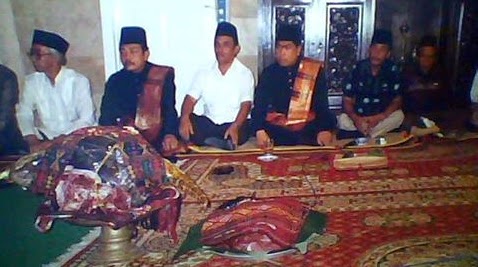

Given the magnitude of the benefits of sound "nasal" it in daily life, especially in relation to the disclosure of a sense of loving affection ("olong"), then the tidal redundant to do a more in-depth research, especially in Islamic religious schools (like "pesantren"/Islamic religious schools) and its application in human beings imtens in the association so as to create a more polite way of life and harmony. 


REFERENCE: 

Edi Nasution, Tulila: Muzik Bujukan Mandailaing, Penang-Malaysia: Areca Books , 2007. 

Pangaduan Z. Lubis "Bahasa Mandailaing", http: //www.mandailing, org 

Topan Lubis (2010), "Mandailaing di Pasaman Barat", http://topanbaday.wordpress. com/mandailing-in-Pasaman-barat/ 

Zulkifkli B Lubis, Manipol: Studi Oriientasi nilai-Nilai Budaya Mandailaing​​, Medan: Social Politics USU Thesis, 1988) 

Jasinaloan, "Hata Mandailaing", http://bakhsanparinduri85.wordpress.com/2009/ 03/30/saro-mandailing/

Ahmad Bahsan Parinduri & Z Pangaduan Lubis, Kamus Bahasa Mandailaing, Medan: Yayasan Bindu Nusantara, 2010. 

Dinar M Matondang, Nyanyian Tradisional Mandailing Ungut-Ungut: Studi Kasus, Medan: Faculty of Letters USU Thesis 1988. 

James Danandjaya, Folklore Indonesia, Jakarta: Grafitipers, 1986.


FOOTNOTE: 
[1] Hata Somal Mandailaing variety of language is used by people Mandailaing in everyday conversation until today. Hata Andung variety of language is a kind of literature, which is specially used in ancient times by the people at the time bemoaning Mandailaing corpses in funeral ceremonies. Also used by the girl when she was wailing in the presence of his parents at the time of departure will leave them to be brought to the groom's family home. Hata Taes Dohot Jampolak language diversity is a special invective used when things happen that are not good (quarrel or fight). Hata Sibaso is a special variety of language used by the characters Sibaso (medium intermediaries real nature and the supernatural) when it is in a state of trance (trance) and is also used by Datu (traditional healer) at the time of treatment. Hata Parkapur sirkumlokusi is a special variety of language used when people are in the middle of the woods. In the past used by the seekers Mandailaing camphor when in the woods. That is why the diversity of languages ​​is called hata parkapur

[2] In-depth study of the wind instrument game "tulila" in context "markusip" see Edi Nasution, Tulila: MuzikBujukan Mandailaing, (Penang-Malaysia: Areaca Books, 2007).


~O0O~


Selasa, 26 Agustus 2014

al-Mandili

Sheikh Abdul Qadir bin Al Mandili Tholib, North Sumatra 
Biography Ulama Nusantara 


Mandaliling an issue where many great scholars and reliable, between the cleric is Sheikh Abdul Qadir binTolib famous great scholars in Makkah and in the Malay peninsula, There are among us who are not aware of the cleric named Abdul Qadir Mandailing, but the there are two well-known scholars, a more famous in Makkah and Indonesia, while another more famous in Malaysia. Which is very famous in Makkah Sheikh Abdul Qadir master teacher Sobir bin al-Mandili who has taught at Mecca Masjid haram, he is the teacher of all the great scholars of the archipelago, among his disciples Mustafa Sheikh Hussein al-Mandili (founder Musthafawiyah 1912 AD), Sheikh Abdul Halim bin Ahmad al-Mandili Khathib, Abdurrahim Silver Sheikh, Sheikh al-Habib Abdullah Syafi`iyyah Mufti of Perak Ipoh, Kuala Kangsar Sheikh Muhammad Ali, Shaikh Zainuddin When, Sheikh Zainuddin al-Palembani, Sheikh Muhammad Abdul Wahab Ja`far, Sheikh Hasan infallible Medan Deli, Sheikh Daud bin Mahmud al-Jawi, Sheikh Abdul-Latif Mantu, Sheikh Uthman Tegal, Sheikh Mohammad Hussein al-Palembani al-Makki, Sheikh al-Muhsin al-Palimbani Musawa al-Makki, Sheikh Mohammed bin Sleh Idris al-Kelantani al-Makki and others. 

While Sheikh Abdul Qadir very famous in Malaysia is the son of Sheikh Abdul Qadir al-Mandili Tolib. Origin of his birth and I Buya Sheikh Ibrahim al Mandaili Zannun said: "Sheikh Abdul Qadir bin Tolib born in the village in affluent Penyabungan Sigalapang Christmas Mandailing North Sumatra Indonesia, while Sheikh Abdu al-Qadir bin Sobir Mandili was born in Huta Siantar Penyabungan Mandailaing North Sumatra. Sheikh Abdul Qadir bin Tolib was born in the year 1329 Hijri, childhood spent in his hometown, when he was just like the children Mandailaing busy with recitation of al-Qur`an and studied Islamic religion, Islam Mandailaing a strong base and abiding by the religion that affect psychiatric Sheikh Abdul Qadir al-Mandili". 

The tradition migrated to Malaysia not only abundant in this day and age, even since ancient times many people of Sumatra who migrated and emigrated to the land of Malaysia, one of the reasons among many people of Sumatra who emigrated to Malaysia is because the population of the island of Sumatra inhabited Malay, from the royal Langkat until the kingdom of Palembang is Malay and Malay kingdoms, ancient Sumatra Malay people are very strong and close relationship with the Malay Malaysian displacement and emigrated because that happens a lot, even the marital relationship was a lot going on. 

Among the many inhabitants of the island of Sumatra which also berhijarah to the country of Malaysia is the Mandailaing, sebahagian meraka anyone wants to make a living, sebahagiannya longer want to seek religious knowledge, courage Mandailaing residents who fled their homes to seek knowledge to fruition is quite encouraging, so Mandaling spawned many great scholars and intellectuals reliable. 

When Sheikh Abdul Qadir age became an adult he emigrated to Malaysia, in Malaysia, he studied religion of the great scholars of Kedah state, he was so zealous search for knowledge, as well as diligence in worship. Emigrated to Mecca in 1355 hijriyah Sheikh Abdul Qadir left for Makkah al-Mukarramah to perform the rituals of Hajj, Hajj Fardhu after he intends to settle in Makkah al-Mukarramah in order to learn the great scholars who were in Mecca, during the first Makkah is the center of clerics recitation of the archipelago, so many of the youths in the archipelago who wants to spend his youth in Makkah to study, in study of religion is so developed at that time, halaqah-halaqah recitation filled by students. 

Sheikh Abdul Qadir do not want to miss to study well in Mecca, the more determined he attended the lectures of various kinds, from Tawheed, Tasauf, Fiqh, Hadith and others, but his attention to the science tasauf very big, so he tried to to learn and apply it in their everyday lives. Among his teachers was in Makkah Sheikh Mohammad Ali al-Maliki, Omar Sheikh Hamdan Mahrusi, Sheikh Hasan bin Muhammad Masyat, Sheikh Ismail al-Fathoni and Sheikh Mohammad Yasin al-Fadani. After his recitation in Makkah Makkah scholars and scholarly look at the ability of Sheikh Abdul Qadir, then he was given permission to teach in Mecca mosque haram, he berusa to provide easy-to-par understanding of his students, he almost disiflin science teaching in mosque al-Haram, from Nahu halted, Sorof, Hadith, Musthalah Hadith, Tafseer, Fiqh and other Syafi`i. His disciples were never silent, Halaqah he always fulfilled, never less than two hundred students, he was able to attract the attention of students with scientific ahliannya danke, the students are very pleased with the way he teaches, so it is easy to understand it, he one of the archipelago scholars who are not born in Makkah but teaching in Mecca Masjid al-Haram. 

Death of Sheikh Abdul Qadir on December 20 Rabi`ul Awwal 1385 Sheikh Abdul Qadir bin hijriyah Tholib breathed their last meeting with Allah, after suffering a disease which he suffered, the people of Mecca very kewafatan grieve with him, so lose the clerical students role models their sobs kewafatan envelops pious scholar, many mourners and pensolat show how great their love of Sheikh Abdul Qadir a-Manidili, he was buried in the cemetery at Makkah Mukarramah Ma`la. [*]


~0~


Mahr


THE SOCIAL FUNCTION OF MAHR IN UPPER MANDAILING, SUMATRA


DONALD J. TUGBY 
University of Qwcnsland 


IN ISLAMIC canon law the manner in which property is inherited is rigidly I defined. Furthermore, the Islamic system of ethics defines the social roles of members of the nuclear family. Therefore, there are certain features peculiar to Islamization as a process of social change. We should expect to find re peatedly a reversion to the model for the social structure which is implicit in Islamic canon law and ethics. This article reports a modest start on the testing of this hypothesis. The aim of the article is to analyze the social effects in the Islamized society of Upper Mandailing of the adoption of one provision of canon law, namely, that about a payment (mahr) made by a man to any woman he marries. No attempt is made to provide a diachronic analysis of the total process of Islamization; instead, a synchronic comparative analysis is made of alternative ways in which the introduced institution of mahr is currently dealt with in Upper Mandailing society.' 

Mandailing is the southernmost part of the Propinsi Sumatera Utara (Province of North Sumatra) in the Republic of Indonesia. The area may be divided into two parts: a northern part, Lower Mandailing (Mandailing Djai), and a southern part, Upper Mandailing (Mandailing Djulu). The population of Upper Mandailing is approximately 47,000, of which about eight percent are Ulu, about two percent belong to some group foreign to the area such as Javanese, Menangkabau, Northern Batak, Chinese, Indian or Pakistani and the remainder are the people we shall call Upper Mandailingers. 

The Upper Mandailingers are rice farmers who grow rubber, coffee, cinnamon, and cloves as cash crops. They live in villages of from 20 to 500 houses. Each household consists of a nuclear family with possible accretions such as an aged parent or a younger sibling of the male household head.

Each village has its own mosque and the Upper Mandailingers all regard themselves as Muslims. Some were forcibly converted to Islam about 1810 when the Paderis, a revivalist sect of Menangkabau, staged a military invasion of Mandailing. The Dutch, who had not previously entered Upper Mandailing, were called on by the indigenous leaders (radjas) for help. The Dutch drove the Paderi military forces from the area, occupied it with their own and appointed a civil administrator (Controleur) in Upper Mandailing in 1835, but the Paderis continued their teaching. Today, because of their adherence to religious formalism, the Upper Mandailingers are known as religious fanatics by their now easier-going neighbors. 

The pre-Islamic social structure and religion of Upper Mandailing was probably similar to that of the Bataks of northern Tapanuli. In spite of Islamization it has been assumed by scholars that it has remained the same. Thus the part of the social structure which concerns us here has been succinctly described by ter Haar (1948:65) as having as its characteristic unit a “localized, exogamous, patrilocal clan or subclan inhabiting its own territory.” Ter Haar goes on to say: “Running through the pattern of relationship of the ruling local clan to non-clan members living in the local community is the special relation of the clans supplying women to the clans which receive them. . . . Each clan has a fixed relation to another clan, which results in the principle that all the girls of a clan are married out to the men of another. The woman-supplying clan is called . . . moru2 in the south (i.e. in Mandailing). The woman-receiving clan is dubbed the boru or beru. It is important to note however that the relation is not mutual. This produces the complex known as asymmetrical marriage.” 


This is a statement of the ideal-typical pattern of a portion of Upper Mandailing social structure, but it does not accord with the social facts of today. The concepts of woman-giving and woman-receiving units are still an effective element in the Upper Mandailing conceptualization of the social structure, but the units in woman-giving and woman-receiving relations are very much smaller than clans; they are nuclear families or small lineages. The members of a group of siblings may marry women of different clans, their sons likewise. 

There are no large units in permanent woman-giving/woman-receiving relationships. The jural unity of the lineage is a function of the ownership of the land in common by members of the lineage. In the last two or three generations land has rarely remained undivided for more than one generation. A reduction in the size of the effective lineage has occurred, then, pari passu with the fragmentation of land.

The political and social significance of an asymmetrical marriage system is manifested in the nature and direction of the prestations from woman-giving and woman-receiving groups to their respective partners. In the indigenous adat system in Upper Mandailing there were and are two payments expressed in money terms, the great gold (sere na godang) and the little gold (sere na menek). The direction of payment is from a woman-receiving group to its woman-giving group. However, the great gold is never paid. It remains ideally as a debt in perpetuity; as the Mandailingers say, to one’s children and one’s children’s children. The existence of the debt and the relative subservience which is its corollary is symbolized by the personal services which a man will render for his father-in-law and by the relatively menial services which woman-receivers carry out for woman-givers on ceremonial occasions. The lit tie gold, on the other hand, is paid, usually in cash, by the father of the bridegroom to the father of the bride before the adat wedding. It is used mainly for buying finery for the bride. 


In the course of Islamization the institution of mahr, a payment which according to canon law a man must undertake to make to a woman whom he marries, had to be added to existing social practices or redefined in terms of existing social practices oriented to the same set of aims. The problem for the Upper Mandailingers was and is the maintenance of logical consistency in the social definition of mahr. This is a problem which can be solved in a number of ways. After outlining the conditions associated with the payment of mahr and with the indigenous adat payments we shall analyze the social consequences of the alternative definitions. 


MARRIAGE PAYMENTS 

In Islamic canon law, mahr3 is a compulsory settlement4 payable by the husband to the wife to whom it belongs absolutely. It is an inalienable and imprescriptible right forming part of the contract of marriage whether specified or not. The husband cannot resile from it once consummation has taken place. But the wife can make a gift of her mahr to her husband, and if she does so, he and his heirs are free from the debt. Rlahr may remain as a debt, but it becomes payable immediately on divorce. According to a strict interpretation of Sjafite law, all mahr is prompt, i.e., payable immediately on marriage. The Mandailingers, however, appear to believe that all mahr may be deferred, i.e., payable at any time after marriage and even inherited as a debt. In fact, prompt mahr is payable on demand by the wife, but this clause is frequently obscured in Upper Mandailing. 

Nevertheless, these general conditions associated with mahr are widely known. Mandailingers demonstrate their appreciation of the imprescriptible nature of mahr by saying that if mahr is not paid during the life of a man, it must be paid in the after life (Achirat). Women sometimes absolve their husbands from the debt immediately prior to the death of either party. But this is not always done and in some cases cannot be done for reasons beyond the control of the parties, e.g., accidental death. There are one or two cases of the payment of the mahr due to a widow by her son on behalf of his dead father; this accords with the nature of mahr as an unsecured debt which may be charged against the property of a dead husband. Since in normal Upper Mandailing practice sons inherit the property of their father, it is understandable that they should pay the mahr of their mother. 

There are no de facto wives in the area and marriage is always accompanied by the Islamic canon law wedding ceremony (nikah) which is to be distinguished from an adat wedding. The latter is a much longer ceremony in which the canon law ceremony may be incorporated as a minor part. Nevertheless, the canon law ceremony constitutes both a necessary and sufficient condition for marriage; moreover, the mahr is always specified during this ceremony. 

The payment of mahr is, then, universal. The adat payment of the great gold is always specified in terms of the measures for gold, fail and pa, and ideally varies according to the matrilineal ancestry of the bride. The little gold is also called fine gold (sere nu Zamol), a euphemism for cash. Outside the context of adat ceremonial it is known as the money which disappears (epeng na mago mago), or as cloud money (uang ombun), or vulgarly as heat money (uang angus). This money is paid to the bride’s father in cash. It is supposed to be used for the purchase of an outfit of clothes and ornaments for the bride, but in certain circumstances the bride’s father may make use of it for his own purposes. As far as the donor is concerned, then, this money “disappears.” Either the great gold or the money which disappears may be designated as mahr. 

There are therefore at least three possibilities: 
(1) The great gold is designated as mahr; the money which disappears is paid 
(2) The great gold remains as a debt in adat; the money which disappears is desig- 
(3) The great gold remains as a debt in adat; the money which disappears is paid 
The adoption of one or other of these alternatives affects the intergroup relationships of the wife-givers and wife-receivers and the social position of the wife.


DESIGNATION OF THE GREAT COLD AS MAHR 

The adoption of this first alternative emasculates the woman-giving/woman-receiving relationship insofar as this turns on the notion of the debt of wife-receiving to wife-giving group. Mahr is payable solely by the husband and solely to the wife. Hence the jural basis in adat of the group relationship of the wife-givers and wife-receivers has been removed and the interpersonal relationship of husband and wife which should unfold to reveal the group relationship of larger scale does not do so. The entailments of the marriage are confined jurally-and within the framework of canon law rather than adat-primarily to intranuclear family relationships. But although this right of re ceipt of mahr is a jus in personam, the claim may be made against the estate of the husband and insofar as the latter has rights in common in the property of his minimal lineage, the members of the latter are also involved. 

Hence the lien which a widow appears to exercise over the use of the property of her late husband-she is normally allowed the use of the property until her death-is not solely dependent on the ties of sentiment between mother and son. It is paralleled in canon law by the widow’s right of retention of the property of her late husband of which she is in legal occupation at the time of his death as a security against the payment of her mahr. This right does not confer any title to the property, which she cannot alienate, and the right expires should her mahr be paid; her position depends therefore upon the nature and amount of the mahr and the possibility or impossibility of its being paid. 

The lowest mahr which is specified in terms of the great gold is one tail plus one pa. At current gold values, this is worth about Rp. 1500,* quite beyond the reach of the average village farmer, since this normally represents about half the value of the wet rice fields of the lineage, of which no individual is the sole owner. A mahr of this kind will not normally be paid during the lifetime of the husband and, therefore, a widow who has not absolved her husband from the debt is in a strong position in canon law in relation to her right of retention of 
her late husband’s property after his death. 

During the lifetime of the husband, however, a high mahr does not in itself lead to stability of marriage, though it may conduce to difficulty of divorce. A husband can divorce his wife by a single pronouncement of repudiation (talak sada); divorce only becomes irrevocable after the expiration of a period of approximately three months following the pronouncement (iddat), during which cohabitation is not allowed. Pronouncements may be made on one occasion or singly on different occasions. But after three pronouncements the couple can not remarry until the woman has contracted a valid consummated marriage with a third party and been duly divorced. A single or double pronouncement or each of two successive single pronouncements may be cancelled by uttering a formula of reconciliation before the expiration of iddat. If there is a high mahr the husband tends to make no pronouncement of repudiation but effects a separation. The mahr is not now exigible, as it normally would be after the expiration of iddat, but the position is obscured by doubt as to whether the husband intends to utter the formula of repudiation or has already done so followed by a formula of reconciliation. He may take the latter course without reference to his wife or even in her absence. By maintaining uncertainty in this matter a husband may delay payment of the mahr for months, even for years. In the meantime the wife is not legally free to remarry, but the husband may legally marry another wife. Women in this situation are called hanging or dependent widow (djando margantung). Usually their only remedy is to forfeit their mahr.


DESIGNATION OF THE MONEY WHICH DISAPPEARS AS MAHR 

If the second alternative for the specification of mahr is adopted, the wornan-giving/woman-receiving relationship epitomized in the notion of debt of the great gold remains intact. The allotment of the money which disappears for different purposes is a matter for discussion between the bride and her father. There is a dissonance, however, between the ideal-typical pattern of father-daughter relations, the jural conditions associated with mahr and the tacit recognition that all parties endeavor to make the most of the situation for themselves. It is better, older informants say, if the girl’s father determines the amount of her mahr, it is fine, good (elok), if the matter of its payment is determined by discussion between the girl’s father and the father of her suitor. 

The mahr itself belongs absolutely to the girl-on this point all informants are adamant-but it can be used by her father with her permission. The divid ing line between determination of amount and retention therefore becomes a fine one. Fathers who can bring pressure to bear upon their daughters may well be able to retain a portion of the mahr and at least avoid paying the costs of the marriage ceremonies out of their own pocket. In some villages this is the normal practice. Nevertheless it is universally acknowledged that fathers who connive to obtain a portion of their daughter’s mahr deserve denigration and they are themselves ashamed should this be discovered. The contents of the bride’s marriage portion are in fact checked against the money given to the bride’s father by the members of the lineage of the groom when the marriage portion is brought to the groom’s father’s house for the adat wedding ceremony. Normally, it is a matter of pride for the bride’s father to augment the portion rather than otherwise. The designation of the money which disappears as mahr therefore acts as a check upon the avariciousness of the bride’s father. 

Where a suitor is pressing, a girl who wishes to make the most of the situation may demand large prewedding presents, usually a gold necklace and less valuable earrings and bracelets, which may or may not be counted against the payment of mahr. This is made clear and put in writing, a necessary precaution since, it is said, many girls want the clothes and ornaments but not the man. 

Having obtained the former they may well attempt to resile from the implied contract to marry by running away; this they may do after the wedding, but the mahr is recoverable if consummation has not taken place. 

Using the mahr to buy the marriage portion of the bride is seen as a good arrangement from the man’s point of view, since it frees him at least temporarily from the necessity of buying the clothes which his wife would be able to demand as a right of maintenance under the contract of marriage. 

A gold necklace worth about Rp.300.00 to Rp.500.00 normally forms part of a marriage portion. This acts as a permanent, tangible and readily exchangeable asset which provides a wife with a certain security in case of divorce. In the course of time the necklace comes to be regarded as a family asset which may be sold to tide the family over sickness or other emergency. If it is sold for this purpose, a man, being responsible for the support of his family, is deemed to be morally in debt to his wife since he has made use of her mahr. 

Occasionally, therefore, a mahr paid in this form may be said to be conducive to the stability of marriage. In case of divorce, since the mahr has already been paid, the question of its forfeit by the wife does not arise, nor is it recoverable by the husband once consummation has taken place. In this sense, designation of the money which disappears as mahr and payment of a large portion in the form of a necklace does not contribute towards the prevention of divorce.

When the mahr is paid as money which disappears, the whole of the mahr is prompt. This cancels the widow’s right of retention of her husband’s property after his death. But there is a persistent tendency for the payment of mahr to be regarded as deferable. This notion may be transferred to the money which disappears when the latter counts as mahr. There are, therefore, one or two cases of a man remaining in debt to his father-in-law on this account. 


Since this is in accordance with the adat notion of woman-giving/woman-receiving relationships, if such a debt is not compounded by the members of a man’s lineage at the time of the wedding, it tends to persist. Where a debt exists, a social tie is strengthened. For example, the woman-giving/woman-receiving intergroup relationship only exists by virtue of the debt of the great gold and is broken off should the debt be paid; while a woman’s link with her brothers is strengthened if she does not take the share of her dead father’s property to which she is entitled in canon law. In the same way a deferred mahr strengthens the moral tie between husband and wife. 


SEPARATE SPECIFICATION OF THE MAHR 

If this third alternative is adopted, the great gold remains as a debt in adat, and the money which disappears is paid in cash or kind. Adat law payments and canon law payments are thus segregated. The mahr is usually specified in cash and if paid is used for the purchase of gold ornaments. The money which disappears goes to the bride’s father and he may use it either to set off his own ceremonial costs or for the purchase of clothes for the bride, or both. Under this system the mahr may remain as a debt since it is not involved in the necessarily prompt payment of the money which disappears. Since the mahr in question is deferred mahr, or partially so, it may be high. Both high and low mahr are found under this system, the former almost always when a true run away marriage to a market town outside the area takes place. In a “lovematch” of this kind, the girl sets her own mahr, often of the order of Rp.50.00. 

On the return to the village the negotiations with the bride’s father are only in terms of the money which disappears. On the other hand, if a suitor is eager and a girl does not consent to run away, she may specify a large mahr of the order of Rp.2000.00 which she uses to buy gold ornaments. In marriages contracted by wealthier merchants there is usually a mahr of this type. From the merchant’s point of view the designation of the mahr in this way avoids his presenting the ornaments merely as gifts. In other than merchant circles, the specification of a large prompt mahr and a small money which disappears has a different function-it differentiates clearly between the money which the bride’s father may put to his own use and that used to buy clothes and ornaments for the bride, thus making the whole matter certain (tonlu). Socially and psychologically this last is an important function. Socially, because according to canon law certainty and clarity in matters concerning payments are desirable, and psychologically because the Upper Mandailingers live in a world whose future is theologically defined as uncertain and they are themselves insecure. As a reaction against this feeling they make every effort to avoid uncertainty and ambiguity in interpersonal action. It is not a fault (salah) for the bride’s father to pocket the money which disappears, as its name suggests, but he cannot do the same with his daughter’s mahr. Hence certain persons, it is said, merely ask for money without specifying whether this is mahr or great gold or little gold. This is quite legitimate, in fact almost praiseworthy-if one can get the money-it is merely an aspect of seeking (djalaki). 


DISCUSSION 

The existence of these alternatives for the specification of mahr is indicative of the conflict between the accentuation of larger group relationships versus those of smaller scale. In the last 100 years there has been a trend towards the reduction in scale of the units conceived to be in woman-giving/woman-receiving relation, from clans to clan segments, from clan segments to minor and minimal lineages. There has been a concomitant loss of permanency. 

A man’s true tulang (a classificatory kinship term used for both mother’s brother and father-in-law) is not his true mother’s brother, but his true father-in-law. It is with the latter that woman-giving/woman-receiving relationships are activated. The specification of the great gold as mahr provides the ultimate stage in this process of jural re-ordering in reducing the woman-giving/woman-receiving relationship to the level of the nuclear family. 

The social position of married women appears to have been enhanced by the introduction of the institution of mahr. The ability to move from adat to canon law and vice versa in defining social positions and responsibilities which is characteristic of Upper Mandailing has its counterpart within Islam generally in the normal practice of shifting from one school of law to another as convenient. The result, as far as women are concerned, is that the conditions associated with the payment of deferred mahr provide a jural basis for accretion of women to the lineages of their husbands. That is to say a woman becomes a quasi-member of her husband’s lineage by virtue of the debt which is owed to her. In terms of a social tie to the lineage of her husband, which is founded upon economic considerations, she is placed in a similar position to the women who are members of that lineage by birth. The continuity of the social membership of the latter in their lineage is conditional upon their foregoing their right of inheriting a share in the lineage property. The institution of mahr does not stabilize marriage, but it provides assurance of security in widowhood; where the mahr is paid the assurance is thereby weakened. 

The designation of the money which disappears as mahr defeats the true intention of the institution of mahr which is usually defined as being to enhance the security of married women. The money which disappears is essentially a consideration for the bride’s father; its designation as mahr reduces the latter to its original pre-Islamic status as a bride-price.’ The payment of all the mahr promptly probably accounts for the fact that some widows are turned out of their late husband’s houses by their sons.

The stability of the marriage itself, given the necessary condition of the birth of children, depends on the capacity for adjustment of the two parties, but mainly on that of the wife. In spite of the provision of mahr which is intended, and is seen by Mandailingers to be intended, as a method of enhancing the status and security of the wife, her position depends upon forebearance, both in relations with her lineage of origin (and the activation of her rights of inheritance in the property of that lineage) and her lineage of accretion (i.e. the lineage of her husband). A woman-giving group exercises a greater controlling interest over the female as against the male children of the women which it gives. On the other hand, a woman-receiving group ideally exercises an option over the nubile women of its woman-giving group. Thus women have an indeterminate social position; they are like counters in a social game. 

Since women also lack any significant control over resources, they capitalize on their cathectic relations with husbands and sons in order to maintain their influence and status. 


CONCLUSION 

When the institution of mahr is adopted in any society it is particularly likely to become an effective determinant of the form of parts of the social structure. The timing of the payment in relation to the duration of any particular marriage has a certain flexibility, by virtue of which alternative types of specification are possible. Deferment is structurally significant in a negative way in that it allows the social experimentation in which the Upper Mandailingers are clearly indulging. But the definition of the payment as being made from a specific man to a specific woman is unalterable. This dyadic pattern becomes the prototype of the jural definition of marriage and obscures group relationships of larger scale which also turn upon marriage. 

Although it is recognized nowadays that functional disequilibrium of the parts may exist in any social system, it is also asserted that logical consistency in the definition of the parts occurs throughout the system. When a new social practice is introduced into a society, then, it is usually redefined in terms of the existing social practices which are related to the same set of aims as the introduced practice. But such a spurious logical consistency does not neces- 
sarily induce functional harmony. The respective social entailments of the old and new practices may differ sharply (if they do not so differ then the new practice probably constitutes only a cultural embellishment). Social changes take place, often, but not necessarily, in a direction which reestablishes functional harmony.


Three of the more obvious ways in which a social group can treat newly introduced practices are to add them to, adapt them to, or integrate them with existing practices. The first alternative is unusual (the independent specification of mahr is relatively rare). The other two alternatives may appear superficially to avoid any gross social change. But the structural concomitants of the institution of mahr are so rigidly determined that they will prevail in the 
long run. They are tending to do so today in Upper Mandailing as knowledge about modern Islam increases. The social roles of the members of the nuclear family are being redefined in a manner consonant with a structural concomitant to the payment of mahr, namely, the concept of marriage as primarily a dyadic social relationship. At the same time the concept of lineages in woman giving/woman-receiving relationships is becoming socially more and more unreal. Finally we may note that, as a further consequence of this separation of the ideal and actual in social behavior, the social rituals which reaffirmed the tegroup relationship are either dying out or changing their function. 


NOTES 

1. The fieldwork upon which this article is based was carried out in Upper Mandailing for almost two years during 1955 and 1956. The author wishes to acknowledge the financial support from the Australian National University which made this fieldwork possible. 

2. All the terms first presented in italic in this article are terms used in the current, spoken 
Upper Mandailing language. 

3. We shall not reiterate all the conditions associated with the payment of mahr which are 
as valid in Upper Mandailing as elsewhere in the Islamic world where Sjafite law is predominant, but confine attention to those conditions which are significantly expressed in Upper Mandailing eocial practice. 

4. Mahr is usually described as dower. It is incidental to the definition of mahr that should it 
not be paid to a woman during the lifetime of her husband she may claim it from his estate. 
Moreover, if the mahr is paid from her deceased husband’s estate it is not returnable; it belongs to the woman absolutely. It is a compulsory settlement which is presumed in the contract of marriage. 

5. At the official rate of exchange about $132.00, at the blackmarket rate (1956) $48.00. 
6. In Arabia, prior to Islam, on marriage the husband made a gift to the wife, sadaq, and a gift to her parents, mahr. See, for example, Fyzee (1955:llO). 


REFERENCES CITED 

FYZEE, ASAP A. A. 
            1955 Outlines of Muhammadan law. London, Oxford University Press. 
HAAR, B. TEB 
           1948 Adat law in Indonesia. New York, Institute of Pacific Relations. 

source: http://onlinelibrary.wiley.com/doi/10.1525/aa.1959.61.4.02a00080/pdf

~0~


Entri Populer

Total Tayangan Halaman