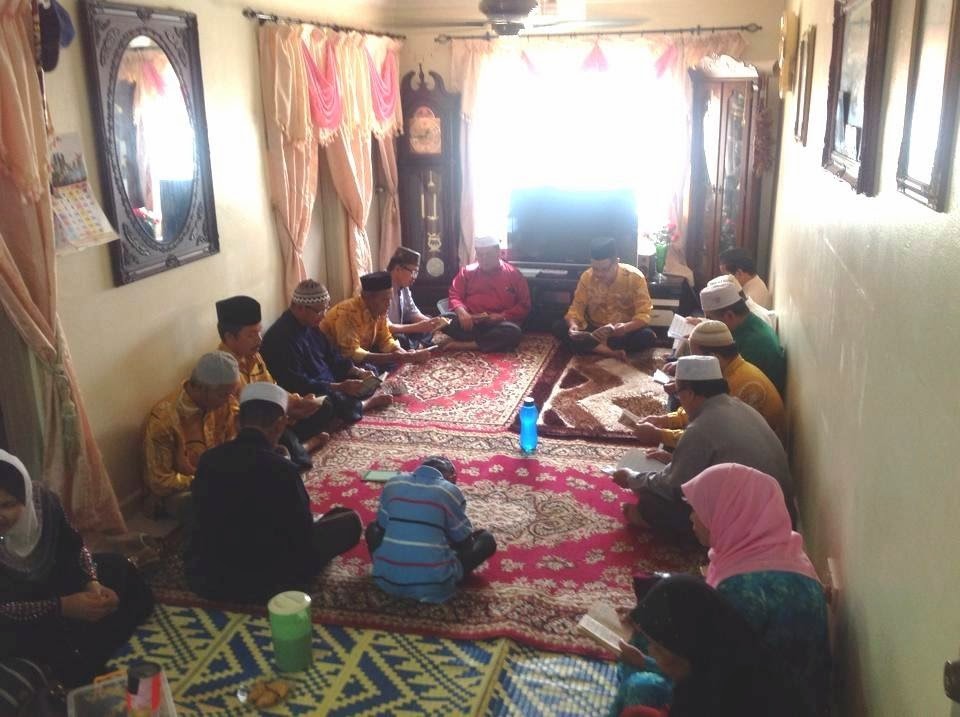
"NASAL" SOUND ON MANDAILING PEOPLE
WHEN THEY SPEAK
By: Edi Nasution
PREFACE
Of course, now everyone in every tribe generally can speak not only to his own people, but also possible with other tribes. Including its neighboring tribes, such as between the Mandailaing with Angkola people who live next door in the interior beach or coastal southwest of Sumatra Island in the northern portion.

In this case, we can use expert opinion HN van der Tuuk language to describe the problem. Van Der Tuuk been doing research on language Mandailaing and some other ethnic languages are there in North Sumatra. From the results of research on language Mandailaing, Van Der Tuuk argues (1971: XLVII), "With reference to the west coast of Sumatra, it can safely be said that the language Mandailaing extends from Ophir or Pasaman mountains in the south up to the northern border of Sipirok and Trunk Toru. language Mandailaing divided into northern Mandailaing language (also called Angkola language) and language Mandailaing south. yet possible to formulate definite boundaries between them".
According to cultural Z Pangaduan Lubis, that the information or opinions Van Der Tuuk shows very clearly that the language and the language of the people Mandailaing Angkola is Mandailaing language. But the language used by people Mandailaing Angkola also called Angkola language. Thus it is clear precisely that there is no language "Angkola Mandailaing" as that recently began touted by "certain people". Such actions actually is a mistake (not to mention manipulation) that should not be done by scholars of language, which is supposed to know about the principles and attitudes emic and ethical in expressing opinions on matters related to culture, including the language as one of the most important elements of culture.

In addition to the five types of the language, the Mandailaing also having any one type of another language, namely "hata-bulung bulung" (language leaves), where Ch. A. van Ophuysen named "bladerentaal". Different from ordinary language, which is used as the words in the "hata-bulung bulung" is the leaves of plants which in Mandailaing called "bulung-bulung".
Leaves used is the leaves that had his name rhyme with the words contained in the language Mandailaing. For example, the leaves of plants is named "sitarak" is used to convey the word "marsarak" (split). The leaves of plants are called "pau" (fern) is used to convey the word "Diau" (on me). The leaves are herbs called "sitanggis" (incense) is used to convey the words of the 'cry'. The leaves of plants are called "podom-podom" is used to convey the word "modom" (sleep). The leaves of plants are called "hadungdung" is used to convey perkatan "dung" (after). And the leaves of the plants named "sitata" is used to convey the word "hita" (us). If for example the leaves "hadungdung" together with the leaf "sitata", "sitarak", "sitanggis" and "podom-podom" delivered by a young man to his lover, the lover will understand that the young man told him: "dung hita marsarak tangis au jolo anso modom" after we parted ways, I cried first and could fall asleep".
In the past, "hata bulung bulung" is usually used by young people (called "naposo na uli bulung") in Mandailaing society, especially at the time they were dating. In this case, it can be argued that in the past dating activities (romance) between boys and girls in the Mandailaing community absolutely should not be done openly. Relationships and dating activities must be kept secret or done rahsia. Therefore, if two young people (teen) who are dating to convey something in between them, so they use a "hata-bulung bulung". And if a lover about to deliver "bulung-bulung" as a "love letter" to his girlfriend, he must do so in secret. For example, by putting "bulung-bulung" is in a certain place they have agreed and are not known to others. Secretly they are dating it will visit the secret place in turns, to see if in that place there is a "love letter" consisting of "bulung-bulung".
If two people in a relationship want to dialogue directly, they will do it in a way that so-called "markusip" (whisper). Activity "markusip" performed at midnight so as not to be known by others. In this case, the young man with furtive way house where his girlfriend went to sleep. Then by using a password or code the boy would wake her boyfriend from behind the walls of the house. To wake your lover, usually youth flick-flick house wall with his finger slowly. In this case, usually the lovers had been waiting for her lover to "markusip" at certain times of the middle of the night. Therefore, the youth simply flicking the wall several times to inform him that he had come and was behind the wall of the house. Sometimes to notify its presence in the wall behind the boy sounding wind instrument called "tulila" whose voice is quite smooth. If the girl already knows her lover's presence behind the wall it, then they start whispering berdailog basis. Dialogue between two people who "markusip" usually decorated with rhyme (called "ende-ende") romantic love. And not infrequently decorated with the music being played by "tulila".[2]
At the present time, the language leaves ("hata-bulung bulung"), and its use has been missing from Mandailing cultural traditions. Similarly, the wide-variety of languagesmentioned above. But that is still being used by Mandailaing citizens in their country is "hata somal" (colloquial varieties). While the diversity of languages other woods, may be said to have almost disappeared altogether. It happened because citizens Mandailaing have not attempted to preserve it. Extinction wide-variety of languages are very rich Mandailaing it would harm ethnic groups Mandailaing, even detrimental to the nation of Indonesia. Because of the diversity of languages is a wealth of ethnic cultures, which have become extinct if it is impossible to turn back.
In addition, Mandailing people the very strong show body language. Not all of the important things to say. Often important things that appear in the body language, whether it is the expression, motion of limbs, and with a completely silent. His interlocutors, must not be misled about what was hidden. Mandailaing people taught not necessarily react in the dialogue. If someone is talking, then when the other party wants to respond, where the latter is the member signs the form of body language cues to the person who speaks it that he will be give response. Is it a response to be delivered positive or negative, can be anticipated by the person who is speaking. So beautiful people Mandailaing dialogue, feel the atmosphere of affection in the dialogue. Usually, no matter how hard and sharp dialogue that occurs in any spoken words, will not cause resentment.

In terms of phonological, language is a language that applying Mandailaing syllabic. Written in script "surat tulak-tulak" (Mandailaing script) which consists of 24 phonemes: a, ha, na, ma, nga, la, pa, ga, ja, ba, ta, ra, sa, da, ka,
ca, nya, wa, i, ya, u, e, o, ng. Phoneme-fenem is denoted by 23 (twenty three) "induk ni surat" and 5 (five) "anak ni surat".

When studied more in depth, according to Jasinaloan again, there are some characteristics that are quite prominent Mandailaing language, among others:
First, the phoneme "k" velar and glottal stop at the end of words is represented by a single sign, although different in nature, such as the word "tetek" significant "tetes" and "buang air besar"; "Sosak" means "cepat" (rush) and "sesak nafas" (breath); "golak" means "gelak" and "ejek"; "etek" means "bibi" (aunt) and "percussion instruments from bamboo".
Secondly, the use of sound (letter) vocals were very productive and varied as well as the following examples:
sa: sarsar, saksak; si: sirsir, siksik; su: sursur, suksuk; se: serser, seksek; so: sorsor, soksok.
ta: taktak, tartar; ti: tiktik, tirtir; tu: tuktuk, tultul; te: tektek, terter; to: toktok, tortor.
pa: Pakpak, paspas; pi: pirpir, pispis; pu: purpur, puspus; pe: Perper, pespes; po: porpor, potpot.
Third, there is a word consisting of vocal groups like: aua, uai, ee, and aa. To detail can be seen in the sentence: "uai iaua he au i" (meaning: "wah akan diapakannyalah aku itu") consisting of twelve vocal group that has never been discovered, such as the shape, in the Mother Tongue owned by other ethnic groups. In addition, the vocals alone can serve as a single morpheme as: "a" in the word number adua (meaning "two"); "I" can mean "it" (ie ima word, which means "that") and the prefix "di" (for example isadu word, meaning "there"), "e" means "hai", "u" means "ku" , and 'o' which means "yes" or "you".
Fourth, greatly affects the intonation on the word meaning. On the basis of the word "bagas" for example, was instrumental tempo pressure determines the meaning. Ba'gas word means "house", while bag'as means "dalam". Other examples such as the word "parmangan". With different pronunciations can be significant: (1) like to eat; (2) The money used to buy food; and (3) how to eat. So also with other forms such as da'bu means "drop", and dabu 'means "in a state of falling".
Fifth, the "root" was instrumental in the formation of basic words. To detail can be seen in the example of the following words: (1) antuk, batuk, kurtuk, lantuk, maturutuk, potuk, retuk, sotuk, tuktuk, utuk; (2) apit, ubit, lompit, narrow, pitpit, tipping, dalkit, bite, ancit, whacky, rongit, angit, arit, sirit, gorit, ririt; (3) andarohot, dapot, dohot, Lolot, morot, korot, sorot, porot, potpot, lampot, ssangkot, sungkot, singkot, sohot, ngot, tungkot, ingot, sirohot, salohot, moncot, to'pot, topot. Of the three examples above each group has the meaning relevance. For example the number one has a relationship with sound, in the second example relates to the relationship meaning something minimal, small, and almost, while the third example has a meaning relationship with the place, the process leading to or leaving.
Sixth, the use of "additive" very productive. In addition to the many number of affixes, function and the notion that appear more varied. One basic word can be imbued by more than twenty affixes. Prefix ma + Dabu can be: (1) mada'bu (fall); (2) ma'dabu (already / in a fallen state, and (3) mandabu (dropped). Allomorph or morpheme variations occur not only on me and pe prefix, but the prefix darling, for example in the form of sambola, sandok, sanggotap . Combined affixes can occur at the end of a word for word example dokon + on (dokonon), + kon (dokononkon), + on (dokononkonon), dorapkononkon. Moreover, affixes can also form adjectives level, for example the words: godang, godangan, gumodang, mago'dang, ma'godang, magodangan, magodangtu, murgodang, murmagodang, murmurmagodang, targodang, tarumgodang, tartargodang, sagodang-godangna.
Seventh, the use of "particles" very dominant. Particles that are used include: ba, bo, da, do, to, le, ma, pe, te, and others. In the Speech Language (oral), the use of these particles is often shortened to an acronym, such as: ro ma ho tu son into roson, kehe ho ma tu si be whispering kesi, and so forth.
CHARACTERISTICS TYPICAL STYLE TALK
The fact shows that the characteristic style of talking people Mandailaing is the pronunciation of words that rhymed. According Topan Lubis (2010), all written letters pronounced. But more than that, the most prominent is the pronunciation of the letter "sengau" (nasal) perfectly. Nasal letters, "n", "m", "ng" is pronounced as a perfect person Mandailaing it raises an "echo" like "multiplex stereo" captured by the ear, then vibrate the skin membrane inside the ear.
He added that the sound "nasal" as if it has a "soul" that could shake the nerves. There is a "magical vibe" that makes it memorable rather deep, uaitu words consisting of the letters "nasal" (n, m, ng) was often ringing in our ears. Nasal voice as it can stimulate an atmosphere of peace and relaxation which is good for those who listen to it, even more so to utter. The sound waves can loosen the nerves, so as to create clarity in managing the workings of the mind and feelings.
This of course is a gift of God which is very large. Communication with lettered words "nasal" it creates familiarity. Pronunciation as it has the power of words spoken by parents in nurturing their children, and this also is the strength of the teachers, preachers, Mr. Sheikh and the agents of renewal in Mandailing. Mandailaing people talking style called "lambok", while talking Angkola and Sipirok style called "laok 'and style talk Padang Lawas called "purpur".
To prove it, try saying the sentence below, with style and style Mandailaing talk talk Angkola, Sipirok, Padang Lawas (Aspal) in one sentence with two styles. The two sentences below will give you the shakes "eardrum" distinct and different impression.
Mandailing style:
"Ning bones in Batangtoru i na, nutmeg old ni Amang nantulang in Pagaran Singkam na na ma ompungku in Gunungtua i."
"Aspal" style:
"Nik tulakku in Bataktoru i na, na pala amaktua ni nattulang in Pagarat Sikkam ma na oppunkku in Gunuktua i."
In this connection, according to Topan Lubis (2010), an example of a very rich language world with the letter "nasal" is French. Pronunciation of French words were soft and melodious, it is recognized as the language of civilization. Once the magnitude of the role of French in the association world, so that one of the requirements to become Secretary of the United Nations (UN), is fluent in French. And the language of the Qur'an, namely Arabic, richer letters "nasal" and the song requires. Therefore there is little influence of the language of the Qur'an in enriching and strengthening the sound of the letters into the nasal pronunciation Mandailaing. Because each letter language of the Qur'an that have "voting rights" that must be spoken clearly. People ask. why this does not happen in the Minangkabau language is also known to be very strongly influenced by the Islamic religion? Let the philologist looking for the answer.
EXPRESSIONS RELATED TRADITIONAL "OLONG"
One of the first derived by the grace of Allah to the earth is a compassion, especially the love of parents to their children, more specifically maternal affection to children who birth. This affection, not only apply to humans, but also applies to animals, compassion is the parent to his children. For example we see the chickens, and many mammals. Compassion is called "olong" in Mandailaing. Many traditional saying that expresses Mandailaing "olong", among others, as follows:
1. Songon siala sampagul, rap tu ginjang rap
tu toru, muda malamun saulak lalu, muda magulang rap margulu.
2.
Sahata saoloan sapangambe sapanaili. Satahi
dohot dongan maroban sonang pangarohai.
3. Muda sabara sabustak, asa salumpat saindege
boti sapangambe sapanaili, hasonangan na so unjung mantak, baritana sai tarbege.
4.
Muda manyuruk rap unduk, muda mangambur rap ipas.
5. Lambok bulung ni eme, na lambok
marluyun-luyun. Lambok lidung binege, ima dalan marhalalungun.
6. Tando batu ni pangkat, lomlom gorsing songon
simbora. Tandona hita na sapokat, bulung botik mardai mera.
7. Oong do mangalap olong. Muda olong roaniba
di dongan, tauken olong ma roa ni dongan di iba. Harani i mada inda tola iba
mantak patidaon olong ni roa i tu dongan-dongan anso di hatiana muse manjagit
iba hadengganan sian dongan.
8. Muda pahae simanggurak, pahulu sitipulon,
antusanna muda ibaen na denggan tu dongan, laing na dengganma jagiton balosna.
9. Mata guru roa sisean. Umpama on idok ma i tu
alak anso sai ra ia maniru na denggan di pangalaho na niidana sian dongan.
10. Muda jongjong di na tigor, batu mamak di andora.
11. Pantun angoluan, teas amatean.
12. Patar songon indahan di balanga.
13. Rukrek ni parau marobaan tu rapotna.
14. Sada do martoktok hite, sude halak
markitehonsa.
15. Sada huat tu jolo dua huat tu pudi.
16. Sadao-dao ni obok-obok ujungna laing madabu
tu tano.
17. Talu do gogo dibaen bisuk.
18. Tubu dingin-dingin di toru ni andomang.
Horas tondi madingin, sian menek lopus matobang.
19. Maranak bisuk-bisuk, marboru pohom-pohom.
20. Salumpat saindege, mate
mangolu sapartahian.
There are many other similar expressions that express affection, agree together, compact, help each other, protect each other, encourage one another, open, alert, like sit, dynamic, spirited pioneer, tough to face any challenge as well, polite, dissent actually strengthen the relationship humane, vying to do good, the past is part of the present and future, death is a necessity, wisdom ("abisukan") is the true power, pray always to get the blessings of life, and so on.
Sati Nasution degree that Sutan Iskandar better known as Willem Iskander (1840-1876) abandon so many poems and several short stories on the theme of love. For example, we can read in the collection of poetry and prose published in 1872 titled Si Bulus Bulus Si Rumbuk-Rumbuk, of which titled: Ajar ni amangna di
anakna na kehe tu sikola, Angkana dohot anggina, Di danak na mompas godang, Olo-olo, Di amateon ni boruna, Na mananom na mate, Amamate
ni alak na lidang, Si Baroar, dan
Tiruan ni olong ni roa marangka maranggi.

This book has stimulated a spirit of remarkable progress. Our old people still remember the verses of a poem by Willem Iskander, although the last time they read it many years ago. Willem Iskander messages have become part of the vocabulary of parents to counsel their children. Willem Iskander brings the idea of renewal by the method of "Olong mangalap olong".
Distribution of the Mandailaing not only to Pasaman, but also to Barumun, even to the area, Dalu-Dalu, Pasir Pangarayan, Rantau Binuang which now includes Kampar regency, Riau, and Lumut in Central Tapanuli. Many villages in Barumun Sosa same name with Mandailing villages whose inhabitants spoke with Mandailaing style, for example Panyabungan, Sinonoan, Siabu, Hutabargot, etc.. Highways Mandailaing was found there, such as Nasution and Lubis.
One historical facts show, the tendency of men to marry girls Mandailaing stronger than the Aspal tendency of Aspal men to marry girls Mandailaing. It is not only the case in the general population, but also among parbagas godang (nobility), among the kings. The reason is, the girl Mandailaing more gentle, motherly, more religious, more patient, and perhaps also because of her beauty. That trend is still there, even though she is not a hard worker Mandailaing in fields and gardens.

According Godon (Dutch colonial officials), "de vrouw is eene goede Mandhelingsche Mother", Mandailaing woman is a good mother (Godon, 1872: 36; Harahap, 2004: 213; 2007: 167). In this connection, there is a fairly well-known Mandailaing concept of "Poda Na Lima" is derived from maternal counsels Mandailaing, is:
1. Paias rohamu (clean soul).
2. Paias pamatangmu (body wash).
3. Paias parabitonmu (clean clothes).
4. Paias bagasmu (clean the house).
5. Paias pakaranganmu (clean yard).
So to speak this is the essence of propaganda Islamiyah very pithy conducted peacefully, full of compassion, and laden with the teachings of Islam that begins from the family home in incest. Poda Na Lima was later owned by the community, which continuously delivered not only in domestic, but also in the custom assembly. Poda Na Lima then became one of the advice promoted by the Government by writing on bulletin boards. Even in front of Oliver's Kotanopan never built a monument Poda Na Five in the language and script Mandailaing.
Prof. H. Abdurrahman Ritonga, M.Pd. revealed that in the past, there are people coming to Mandailaing Sipirok to attend orja, traditional parties. He witnessed the Islamic religion Mandailaing run properly. This he told to the relatives of the good practice of Islam in Mandailing it. People Sipirok learned Islam in Mandailaing and other areas. According to him, the way religious people are not as good Sipirok Mandailaing how religious people (Ritonga, 2006: 238-242).
It is proof, that the preaching Mandailaing with "olong". While "orja" was the top-actualization sense "olong" expressed in words and deeds. The meaning of the word "orja" literally is working. But the concept is hermenetik, more meaningful than the literal sense. In this case, "orja" is defined as a physical and spiritual. Activity "orja" is an ongoing activity where a traditional ceremony (marriage party) because there is the gift of life. Traditional wedding ceremony is "orja", menyambuat and enliven the birth of a child is also "orja", as well as build and occupy a new home, and mutual aid work is also "orja". The whole order of Dalian Na Tolu (kinship system) take the role in "orja". Success "orja" is right and obligation. Even citizens who are excluded in the success of "orja" will demand the right to participate, although participation was indeed a sacrifice. But the sacrifice in the successful "orja" is a sincere sacrifice (Harahap, 1987b: 6). Thus, the events "orja" is an opportunity to preach the most effective.
FINALE
That brief description mengenaii sound "sengau" (nasal) people Mandailaing when berkomusikasi, where it is closely related to the interaction (pargaulan) them with other nations, including Arabs who trade into trading cities (the docks) on the island of Sumatra, and can not deny the fact that the sound "nasal" was very helpful in their lives to be mutually love god among fellow creatures, in accordance with Islamic teachings they have embraced since hundreds of years ago.
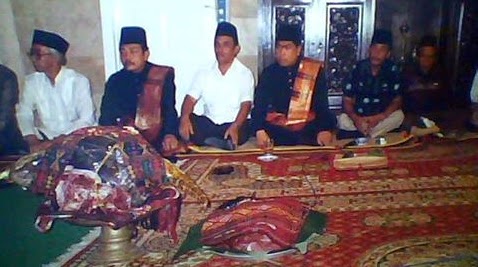
Given the magnitude of the benefits of sound "nasal" it in daily life, especially in relation to the disclosure of a sense of loving affection ("olong"), then the tidal redundant to do a more in-depth research, especially in Islamic religious schools (like "pesantren"/Islamic religious schools) and its application in human beings imtens in the association so as to create a more polite way of life and harmony.
REFERENCE:
Edi Nasution, Tulila: Muzik Bujukan Mandailaing, Penang-Malaysia: Areca Books , 2007.
Pangaduan Z. Lubis "Bahasa Mandailaing", http: //www.mandailing, org
Topan Lubis (2010), "Mandailaing di Pasaman Barat", http://topanbaday.wordpress. com/mandailing-in-Pasaman-barat/
Zulkifkli B Lubis, Manipol: Studi Oriientasi nilai-Nilai Budaya Mandailaing, Medan: Social Politics USU Thesis, 1988)
Jasinaloan, "Hata Mandailaing", http://bakhsanparinduri85.wordpress.com/2009/ 03/30/saro-mandailing/
Ahmad Bahsan Parinduri & Z Pangaduan Lubis, Kamus Bahasa Mandailaing, Medan: Yayasan Bindu Nusantara, 2010.
Dinar M Matondang, Nyanyian Tradisional Mandailing Ungut-Ungut: Studi Kasus, Medan: Faculty of Letters USU Thesis 1988.
James Danandjaya, Folklore Indonesia, Jakarta: Grafitipers, 1986.
[1] Hata Somal Mandailaing variety of language is used by people Mandailaing in everyday conversation until today. Hata Andung variety of language is a kind of literature, which is specially used in ancient times by the people at the time bemoaning Mandailaing corpses in funeral ceremonies. Also used by the girl when she was wailing in the presence of his parents at the time of departure will leave them to be brought to the groom's family home. Hata Taes Dohot Jampolak language diversity is a special invective used when things happen that are not good (quarrel or fight). Hata Sibaso is a special variety of language used by the characters Sibaso (medium intermediaries real nature and the supernatural) when it is in a state of trance (trance) and is also used by Datu (traditional healer) at the time of treatment. Hata Parkapur sirkumlokusi is a special variety of language used when people are in the middle of the woods. In the past used by the seekers Mandailaing camphor when in the woods. That is why the diversity of languages is called hata parkapur.
[2] In-depth study of the wind instrument game "tulila" in context "markusip" see Edi Nasution, Tulila: MuzikBujukan Mandailaing, (Penang-Malaysia: Areaca Books, 2007).
~O0O~


