
MANDAILING ETHNIC COMMUNITIES
IN 'LANDLINE RIAU'
~Prologue
In Indonesia, Mandailing ethnic had a settlement in the province of North Sumatra, West Sumatra, and Riau, but there are some who live in the Land of Peninsular Malaysia. The existence of Mandailing ethnic been used since the 14th century with the inclusion of the name 'Mandahiling' on Sumpah Palapa of Gajah Mada in the 13th poem Kakawin Negarakertagama by Mpu Prapanca works as an expansion area around the year 1287 Çaka Majapahit (1365 AD) to some areas outside Java. Kakawin in the handwriting found in the temple of Lombok Cakranegara then first published in 1902 by the Dutch scholar Dr. J. Brandes in the original language and letters on the book 'Negarakertagama, loftdicht Koning van prapanca op Radjasanagara, Hajam Wuruk, van Majapahit'.
According to oral tradition passed down from generation to generation about the Mandailing ethnic origin that human scaled to Earth by Debata Muljadi Nabolon ('God'), through Ompu Raja Tiantan and his wife Sitapi Nahumombang Diportibi. The couple subsequently give birth and breed rapidly. Further development of the population forced them to move and find a place to stay (settlements) are roomy. Gradually, a new settlement was inaugurated by custom and named Panuju Jakur.
Pilgrimage of the Mandailing to East Sumatra is due to the influence of the massive investment of Deli at that time. This is what makes the people of the South and North Tapanuli 'stranded' to arrive in West Sumatra and Riau. The influence of the invasion carried out by Tuanku Rao, Tambusai and Bonjol Padri forces with her to the Land of Mandailing and Batak.
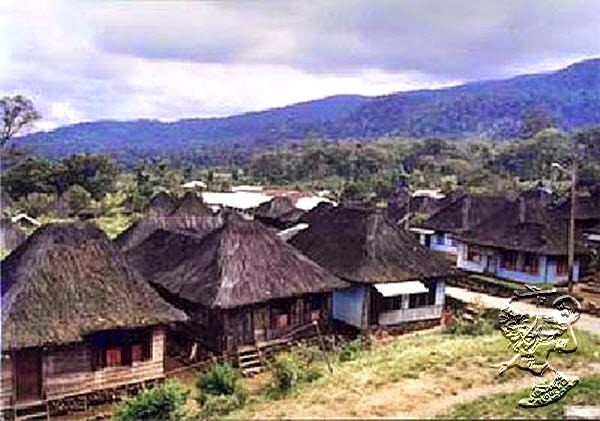
In the process of the establishment of a township in Mandailing always begins with the construction of houses (bagas) used by a group of clans that come from mountainous areas. The group home is usually only consists of three or five houses called Pagaran. In further developments, a Pagaran can continue to grow forming Banjar. Furthermore, Banjar can develop into a Huta.
Another version of the existence of the Mandailing in Riau or in the sand Rambah Pengaraiyan (Rokan Hulu) is the legend of Raja Perempuan Teak Suri Andung popularly known as the host of the Women's empire in the district of Padang Galugur Hutanopan-Mandailing Julu. As a result of a war that happened then Sutan Perempuan fled to the south is the Tambusai kingdom (Batang Sosa) to save his grandson. In accordance with the instructions of Raja Tambusai, then they occupy Rambah area today.
In a historic session in 1823 which at that time was led by Tengku Ibrahim, discretion and Mandailing loyalty to the royal Rambah Malay community, then with the approval of the Raja Rambah great grandfather established that the Mandailing bestowed by the royal society are as follows: (i) given grace Kholifah or customary land; (ii) the Executive Board shall be king or prince in the village each equipped with the treasurer; (iii) can set own custom Mandailing according to law; (iv) It may condemn or judge people according to customary law Mandailing; and (v) It may take a 10% local results.
Since the decision of the Raja Rambah set, then the citizens Mandailing is part of the Malay community Rambah - Rokan Hulu. After being part of the Malay community Rambah, then Mandailing ethnic began clearing land and establish good cooperation with indigenous Rambah (Malay ethnic ). As ethnic immigrants in Rambah, Mandailing people are able to contribute where Malays can accept Mandailing people with different circumstances contained in the socio-cultural life. Similarly Mandailing people tend to respond positively to the Malays (Melayu) and Malays was otherwise able to accept the presence of the Mandailing.

Mandailing ethnic is ethnic immigrants in Riau, especially in the area of Rokan Hulu. The interaction that occurs between Mandailing ethnic and Malay community can be seen in various types of participation in local community Rambah Samo activities, including Malay and Mandailing ethnics shoulders together when mutual help establish mosques, making customs hall, schools and other public facilities. In terms of economic activity can be seen from some of the Mandailing have mastered agriculture and plantation crops. Mandailing people employ Malays as its workforce. Interaction is interwoven with matching harmony is what causes the association between Mandailing and Malay ethnic communities .
Besides being able to interact well, Mandailing ethnic communities in Rambah Samo has also participated in various aspects of one religion. In this case, the famous Mandailing devout religion, so many people Mandailing who became priests of mosques in Rambah Samo, and become a teacher of the Koran in Suluk. In addition, the interaction of these two ethnic groups can be seen when one of the unfortunate citizens of the two ethnic groups helping each other.

In the implementation of the customs, for example, the Mandailing always treat the Malays (Melayu) as part of her relatives. For Mandailing people do not have to wear a problem when the Malay procedures in their marriage customs such as wearing traditional pot bay, fresh flour and present the poem. It is a prerequisite in developing social relationships with Malays ethnic . The influx of Mandailing ethnic in Rambah Samo - Rokan Hulu district. Rambah Samo made into a plural society and could become more heterogeneous, where two ethnic groups have an important contribution in social and cultural life of Rambah Samo society.
In connection with the existence of Mandailing ethnic communities in Riau need to explain some basic things, among others, related to the history arrival of Mandailing ethnic, their involvement in education, religious, socio-cultural, economic. and so on, as follows:
~Mandailing Ethnic Arrival in Rokan Hulu - Riau
The history of the study site initiated a kingdom named Rambah which stood in the middle of the 17th century. Rambah is the founder of the Viceroy and his entourage Sutan Perempuan. Raja Muda was the son of the Raja of the Tambusai Kingdom, while the group Sutan Perempuan are from 'Penyambungan' ('Panyabungan - Mandailing Godang'). They are looking for the location of the Kingdom to follow the flow of the river upstream. Then they found a location that is considered appropriate and make it as the location of the establishment of the Kingdom.
Rambah kingdom former has now expanded into 4 (four) districts namely: District of Rambah, District Rambah Samo, Purba District and Sub-district of Lower Rambah.
According to paper writing by Abdul Malik Nasution or Sutan Laut Api (2010), where the first king who lords Old Seventh of Tambusai Kingdom ruling king who had three sons and a daughter named Tengku Muhammad Ali Bahar degree Tengku Raja Muda, the son of her mother's mistress, Tengku Ali Mukamil degree lords Ahir Zaman and Siti Dulan. After the Raja Tua, given the reins of government to his son ie Tengku Raja Muda, while the head was given to his son that the density of unclaimed End Times.

On the other hand Padang Gelugur kingdom ruled by Sultan Perempuan (Woman King), was a civil war and eventually defeat Sutan Perempuan. But he had to leave for the sake of safety the Padang Gelugur kingdom with two grandchildren (children of the sixth and seventh of Baroar), named Sutan Tua Raja Sulot and his brother Raja Sutan Namora Penyulot and seven family (clan). Sutan entourage went to the Sosa - Tambusai royal. Reason Sutan Perempuan entourage headed Sosa - Tambusai royal is because a grandson married in Sosa named Suri Lindung Bulan (second son of Baroar). Arriving at the Women's royal entourage Sutan Tambusai greeted by Raja Tambusai. While waiting for the decision of the density of the Tambusai Kingdom given temporary shelter at Banjar Pisang Conservative (over 32 years of Banjar Pisang Conservative, after which it was transferred to the Rambah royal).
Meanwhile the Viceroy desire arises to establish a new kingdom, then the desire is conveyed to his parent Yang Dipertuan Raja Tua. After receiving the blessing of the sage called 'datuk-datuk pembesar kerajaan' to convey Tengku Raja Muda desire and to look for a good day for the departure look for a new kingdom. After falling on a given day, the royal entourage departed led Tengku Viceroy and his sister- Yang Dipertuan Akhir Zaman, along with a magnifying datuk-datuk and do not miss the royal entourage Sutan Perempuan.
Was carried out using a boat trip upstream to arrive at a place that is deemed suitable to serve the country or kingdom. So by Yang Dipertuan Akhir Zaman "dirambahkanlah sirambahan" to be a brother country, by datuk-datuk kingdom named it with Rambahan. Once the work is completed then the royal entourage headed back Viceroy and his younger brother Tengku Yang Dipertuan Akhir Zaman to report the results of their work to his parent Yang Dipertuan Tua, and to hold meetings to determine the day of departure transfer Tengku Raja Muda.

Kubu Baru district now is one of the hamlets of the village of West Rambah Samo. New change of status stronghold kingdoms into administrative regions since Indonesian independence. The clearer separation of the current population expansion Kubu Baru - Kampar to Rokan Hulu in 1999. At that time the Rambah district then be stipulated blossom into the Rambah Samo district with several villages.
Kubu Baru are one part of the seven huta formed in the days of the Rambah Kingdom. Increased population in Kubu Baru birth or migration due to expansion of the make Kubu Baru. Huta Kubu Baru blossoming occurred around the year 1919. Huta (village) Kubu Baru develop into a new village. The villages are Huta Surau Gading, Huta Langkitin, and Huta Hasahatan. Huta-Huta mentioned is still in one piece Kubu Baru area with several new villages. This huta-huta story persists until the entry rule of Dutch colonial in 1941.
But when the Japanese government entered Indonesia, which invaded in 1942. Governing Japan changed the way originally created by the Royal Rambah and during the reign of the Dutch with new route. Once the road was made by the Japanese government, began at the time that the separation of Kubu Baru populations, between which still remained in their homelands by the move to the path made by the Japanese government.
The increasing population, the more extensive the area anyway so Surau Gading and Langkitin expand its territory to the east. While the new faction and Hasahatan only shifted slightly toward the west. Huta Kubu Baru so widely separated both in population and area layout.

At the time of development of local autonomy, the Surau Gading and Langkitin village. Administratively, the village had to be fulfilled by the Surau Gading and Langkitin, then Surau Gading into the Langkitin village and also became a While Hasahatan and administratively Kubu Baru village can not be a village, unity with several villages are close to other areas. So Hasahatan and Kubu Baru villagesn to be part of two hamlets of the village of West Rambah Samo.
~The structure of Indigenous and 'Datuk' Which Influential People In The Social Work Mandailing in Riau
In indigenous Rambah Samo West Village communities adheres Mandailing culture. But the culture of the West Rambah Samo village has also been slightly influenced by Malay culture. So if considered in depth both the start of the language, how to dress, daily habits, cultural activities and even different from the traditional governance structure Mandailing in general. In terms of the structure of the indigenous government, Mandailing community leaders recognize the highest form of Sutan Laut Api, the highest of Huta Kubu Baru and Haiti forest. From the highest Sutan also served 7 (seven) Sutan beneath which occupies 7 (seven) or Napituhuta village. Each village is headed by a single parent shrinkage is also in charge of several tribes. parent tribe (clan leader) is the amount determined each village (Huta). The number is based on the existence of stem tribal clans that exist in the Huta. This parent tribe responsible for the clan headed.

In the kinship system that embraces Mandailing patrilineal lineage Dalian Natolu know the name. In the kinship system is very thick with life combined with the spirit of togetherness Dalian Natolu. Be it in the face of problems or events happiness (siriaon). Dalian Natolu principles, Mandailing community in Rambah Samo West village illustrates the distribution of tasks within a large family.

This division of tasks such as suhut (host), anak boru (families whose children younger women), and mora (family-law) or the family of the wife. The spirit of division of tasks is to divide the responsibility for dealing with problems in the family and in the home. In other respects there is another part of the family can work together to tackle the problems that pisang raut is the anak boru ni anak boru.
~Social Interaction Mandailing and Malays Ethnics in Rambah Samo District
In terms of social activities, social interaction can be viewed from a variety of activities that blend in with the community, such as mutual assistance, 'Jumat bersih', build public facilities. Mandailing people show their participation, giving rise to the perception that good. In contrast, the Malays also treat the same thing by showing the sympathetic attitude also involved in various social activities.
In terms of customs, the Mandailing always treat the Malays as relatives. They were invited to a dinner party, wearing a Mandailing traditional wedding device combined with the local Malay traditional wedding. Similarly, in a ceremony misfortune.

Mandailing people will attend the ritual Malays misfortune, and vice versa. For Mandailing people do not have to wear a problem when the Malay ordinances in their marriage customs such as wearing a bay tradition pot, fresh flour or hall and berpantun. It is both a prerequisite and awakening in fostering social interaction between the two sides.
In terms of religion seems both tend to be followers of the religion of Islam. They are both carrying out religious rituals such as prayer in the mosque five times a day, Friday prayer, or 'wirid yassin', as well as study groups of parents, children and adolescents mosque. In some mosques, it appears that the Mandailing appear as a mosque caretaker, a priest and preacher.
In terms of economic activity appears that some people have mastered Mandailing agricultural crops and gardening. The sector employs a lot of Mandailing-Malays people. And vice versa where Mandailing many people who work on the land of the Malays.

In terms of politics, much in the management of the party, for example, members of the two groups were sitting side by side. Fostering political parties, campaigning and attending regional parliament. However, they found that primordial pattern of regional ties, where the Malays tend to support the candidate of his community, and vice versa happens on the Mandailing. However, to date, there are no socio-political inequalities.
The forms of interaction that exists between the two ethnic groups are among the Malays is Mandailing with timbale-forth interaction. Mandailing people tend to regard the Malays as part of a group, as well as vice versa. Mandailing people tend to appreciate the Malays as the indigenous communities so rare for them to do mischief, fighting tribalism or highlight them as Mandailing.
~Participation Rambah Samo Barat Village Community In Social Work
Public participation is a form of engagement and active participation community and volunteering, both for reasons of in himself and outside himself in the overall process of the organization. The participation form can be contributed material and non-material, active and passive participation.
Community participation or community participation in social activities include the participation of individuals, groups, families, professional organizations, employers and community organizations in organizing and controlling the quality of education services. In addition, people can participate as the source, implementers and users of the results.

Characteristic communities with strong social capital demonstrated by its ability to implement a cooperative network above unity (solidarity), honesty, trust and mutual responsibility. For example, if a resident is organizing a celebration of neighbors helping each other is definitely coming. A number of significant events in the life of a very respected, considered sacred and must be assisted by full mutual cooperation, both in good times and bad. The events that captured the hearts of the people, among others, marriage, circumcision, setting up home, baby shower, or when experiencing hardship, illness, and death. All the neighbors work together to contribute selflessly to one reason is to help.

Mandailing ethnic community in the village of West Rambah Samo has a very strong solidarity in social activities. Robust Mandailing ethnic solidarity in the Rambah Samo Western village culture this can be due to factors those of their ancestors have been there and is maintained until today. Community participation is the most powerful Mandailing ethnic can be seen from several fields such as education, religion, agriculture, social-cultural, and economic.
~Participation Mandailing Ethnic In Education
In a country that upholds democracy, it is believed that the government is made of, by and for the people. State policies, including education policy, as part of the device to run the government in the country of Indonesia, also came from, by and for the people. Therefore, community participation in education policy is an absolute that must be carried by society.

Ethnic Mandailing community participation in education at West Rambah Samo village can be seen from their participation in the development process of the school. Mandailing ethnic communities in rural western Rambah Samo has a shape different participation in education development in rural West Rambah Samo among others there are who become donors construction of schools, there are directly involved in school construction projects with a handyman and worked together with the community to accelerate the establishment of schools, and there are also people who become school committee.

The active participation of ethnic communities in the Mandailing Rambah Samo West village is urgently needed, because with the active participation of the educational community will be able to run well, people should also criticized even against the policies of the schools were deemed detrimental to their students. Participation as practiced by the Mandailing ethnic communities in addition to improving the quality of education may also reflect how society cares Rambah Samo village West toward education.
~In Religious Affairs
Public participation in the religious field integrated with other sectors, is expected to realize the human and qualified Indonesian society, physical-spiritual, material-spiritual, so that the Indonesian people can grow and develop equal with other nations that have been advanced. Reform in all areas mentioned above is done to revive and strengthen confidence in the ability to perform the steps rescue, recovery, stabilization, and development of a new paradigm of development with Indonesia in the future.

Forms of public participation in the religious field, the most prominent is the participation in the form of funds, followed by the thought/moral, and facilities. Whatever the form of partisipation Mandailing ethnic communities in rural western Rambah Samo in the field of religion deserves to be appreciated. In this era of the all hedonic Mandailing ethnic communities in rural Western Samo Rambah are able to think of the construction and development of religious values.

~In the Agricultural Sector
Public participation is the involvement, participation or involvement related to outward circumstances ranging from the socialization, planning, implementation, and preservation activities by donating energy, thoughts, or in the form of material.
Agricultural development is a series of processes that intentionally done to achieve certain goals into a better direction in developing and improving the agricultural sector. Paritisipasi in the agricultural sector is a form of participation by the community in developing the agricultural sector ranging from participation phase of socialization, planning, to implementation.

Social activities and participation in agriculture such as Mandailing ethnic is already much reduced from time to time. It is said that when the villagers are still working as an opener yet mengenak farmland and gardens, social solidarity is very high. This is evident in whatever work they have high solidarity. For example, when the head of the family wants to grow rice ('manugal padi'), then other people will come in droves to help, and vice versa if the people who helped it wants manugal rice, anyone who ever helped assisted also required. This system of social solidarity as they refer to as 'karejo parari'. Things like this in Mandailing ethnic culture called 'marsialap ari'.

Although the change of the system of rice cultivation to plantation now when this happens, the villagers still have social activities such as work together to clear a path to the plantation. For cultivation which still survive at the present time is the time of harvest. Harvesting is done by the family will be done by a few families. Some families will head down to the field to 'menggotil'. Harvest system 'menggotil' is the same as the activities 'karejo porari' which is also recompense.
~In Social-Cultural Affairs
In the village of West Samo Rambah lot of social activities associated with rural community social ties. In a wedding party, for example, villagers will begin helping others shows the determination of the party committee until its closure. In a wedding ceremony the host rarely rent a tent or food catering. To make the tent usually they will sacrifice their time working one full day to build 'Salasa' (tent). 'Salasa' is done together both young and old groups, so that in one day they had prepared a place for the party. 'Salasa' built consists of several parts: the tent where cooking (Salasa kitchen), custom tent (where ongoing core activities) and the entertainment tent (this Salasa if there is entertainment in the form using the keyboard or the like).

In addition, mothers in this village also usually carry equipment and materials for cooking, such as rice, coconut, chicken, chili, and other cooking spices. The mothers not only bring these materials, but they also helped to cook the ingredients until ready to serve. Not only that, the mothers also help clean the dirty dishes, even up to 1 day after the event.

Social activities are carried out by fathers (men) was conducted mutual cooperation once a month. Mutual assistance made on Friday after finishing hold Friday prayers. This activity focused on cleaning ditches, paths, houses of worship, and also the burial place (cemetery). In addition, if there are other activities such sudden arrival of government officials, then they will work together for things in need.

Not only are the fathers and mothers of the young but also social activities. This activity is in the field of sports, welcoming national holidays, and religious activities. In the event of a national day reception, the youth will work together to create an event. Mutual cooperation is carried out starting from the collection of funds (fund-raising) to the making of the location of the event, the committee, as well as implementation. In addition, the youth will also provide assistance to other youth that are both energy issues and material.
~In the Economy
Economic activities can be seen from the pattern of economic activity of the population, land use, and settlement patterns based on the physical condition of the earth's surface. Thus, the population economic activity was closely related to their environment. Speaking of economic activity population means talking about livelihood systems. Livelihood is an activity of daily living residents to meet their needs. In order to meet their needs, residents seek employment in accordance with his ability.

In the fulfillment of economic needs Mandailing ethnic communities in rural Western Samo Rambah highly dependent on agriculture, plantations and forestry. Forests are very useful for living beings. Forests can be used as a source of livelihood. Of the forest, we can take wood, rattan, and resin. The sectors which is the principal livelihood of rural communities in the West Rambah Samo, which of the passage of this economic sector is strongly influenced by ethnic Mandailing Rambah Samo West village, because it is ethnic ethnicity dominates and many became owners of the land so that the process Mandailing ethnic communities to develop land in the village of West Samo Rambah be decisive.

Social activities Rambah Samo villagers from other Western and economics are related to the form of social contributions for around villages. If there is a disaster for the residents such as fire, then other people will do the quote donations. There are also routine in citing the contribution that each Tuesday. Tuesday is market day for the people of New faction (in Mandailing called 'ari poken'). Tuesday is usually used masyarakkat village to sell the plantation (rubber, chilies, vegetables and fruits major). From the sale of these villagers were able to give a donation of 1 (one) tekong rice and a thousand dollars.
~ Epilogue
Mandailing ethnic community participation in matters relating to the development of education in the village of West Samo Rambah actually began long. In this case, the public Rambah Samo Western was very concerned with education for the community because Rambah Samo Western education is a bridge to the future of their children.
However Mandailing ethnic community participation in agriculture today in solidarity cooperation Rambah Samo West Village community has declined. This is due to differences in the economic motives of solidarity society that has long existed already begun to fade.

Meanwhile, Mandailing ethnic participation in the development and construction in the field of religion is very strong because Mandailing ethnic community in the village of West Samo Rambah still adhere to the values of religion (Islam). And the West Village community Rambah Samo also frequently participate in religious activities are held even those willing to leave a job in order to follow the religious activities.
In the field of social-cultural Mandailing ethnic also arguably still strong solidarity. It can be seen from the various activities that are often done as a community of mutual help, such as collaborative help if there is one member of the public who wish to perform a marriage celebration.
While in economics. participation awarded by Mandailing ethnic communities are very clear and obvious to the public at large. It can be seen from the dues that people do to help people suffering from disaster and also to hold dues for the construction of public facilities construction.

Accordingly, there are two (2) pieces of advice. First, the government Rambah Samo West Village area should have to control and improve their participation due to the participation of a better society will realize a society that is safe, comfortable and peaceful. And secondly, for the people of ethnic Mandailing Rambah Samo West village in particular should be further enhanced cooperation, solidarity and a sense of togetherness in activities in the community so that people can be directly involved in social activities. (EN)
Gandoang. July 11. 2014.
(from various sources)
~ 0 ~


