Tampilkan postingan dengan label si baso. Tampilkan semua postingan

Minggu, 09 Februari 2014

Mandaili Culture (8)

MANDAILING CULTURE: A BRIEF OVERVIEW


(b). Tradiotional Dance

Traditional dance held Mandailing ethnic group can be classified into three types, namely ‘tortor’, ‘sarama’, and ‘moncak’ ('often called 'cilek'), which was held at various ceremonies and rituals such as haroan boru and mebat (customary marriage), mambulungi (traditional ceremonial demise), ‘sorang danak’ (birth children), ‘mangido udan’ (ask raining), and others. Various Mandailing traditional dance, especially tortor and moncak, until now often displayed in grand celebrations like Independence Day commemoration of the Republic of Indonesia, National Education Day, and so on. The three types of traditional dance Mandailing has the basics of beauty (aesthetics) in the form of unity, variety, contrast, transition, repetition, sequence (linkage or continuity), balance, climax, and harmony.

In a ritual as ‘paturun sibaso’ (‘marsibaso’ or ‘pasusur begu’), sarama dances accompanied by musical ensembles custom ‘gordang sambilan’ or ‘gondang dua’, while the dancers of the person who called si baso, shaman is a character in the old religion Mandailing called pelebegu. In the past, the ritual ceremony ‘paturun si baso’ was held when the ‘huta’ (‘banua’) a major disaster occurs such as cholera outbreaks and drought or prolonged rainy season otherwise interfere with agricultural activities so that the local population, which will eventually lead to starvation because of endless supplies of rice as their staple food to solve ‘bala na godang’ (major disaster), they ask for help begu, ie the spirits of ancestors, through the mediation of ‘si baso’, because they believed that this is the first ‘si baso’ can only communicate with the ‘begu’.

Figure. Sarama or Manyarama.

‘Paturun sibaso’ ritual first ritual conducted in the experience of alternating (wide page) in ‘bagas godang’ (king's palace), which was attended by the ‘raja’, ‘namora Natoras’, ‘si tuan najaji’ (‘alak na jaji’, and a supernatural character named 'datu' very large role, especially for led in the ritual ceremonies. At that time, Datu seen as ‘treasury’ because it has a wide variety of traditional knowledge (traditional wisdom) which is needed for the perfection of life or ‘banua’ (‘huta’) community.

In the ritual ‘paturun si baso’ provided special food for si baso, ie parlaslas, placed on a tray containing among others a crisp (‘mera’ fish) burned, ‘pege’, and ‘ngiro’ (‘sap water’) in the ‘tanduk ni orbo’ (container made of buffalo horn). After ‘gordang sambilan’ played with ‘gondang’ (music repertoire) special with name ‘mamele begu’, then ‘si baso’ also danced and then experienced a trance. In trance condition this, si baso asked to eat and drink. After eating and drinking, si baso back dancing. Not long after, the datu came si baso to notify the existence of an event ‘bala na godang’ (major disaster) that has engulfed the population, and appealed to ‘si baso’ so pleased to inquire what is the cause and what's the solution to the begu because the population is no longer able to cope. After that, si baso tell what is the cause and how to cope with the great calamity to the datu. After that, ‘si baso’ was dropped, and unconsciousness (passing out). A few moments later he was conscious again as before , the situation before the ritual begins.

Tigers that live and thrive in the dense forests, called babiat, for the Mandailing very important because in addition to having incredible strength physically, also believed to have their own customs and traditions. Mandailing people ‘marga’ (surnamed) Rangkuti and Parinduri who settled in the Maga region, which is the border between Mandailing Godang and Mandailing Julu, believing that their first ancestor is ‘incarnation’ of the tiger. They and other Mandailing people generally taboomentions a tiger by the name ‘babiat’ as deemed unethical. Therefore, tigers are called by specific names such as ‘raja’ (we the kings), ‘ompung’ (our grandfather's ), ‘na maradati’ (which is the well-mannered), and ‘na gogo i’ (strong's ). So do not be surprised if Mandailing people surnamed Rangkuti seen as the ‘dreaded ones’, which translates from his family name consisting of two words, namely ‘rang’ (people ) and ‘kuti’ (dreaded) according to oral tradition.

The names of the name for the tiger is one of the variety of language Mandailing, namely ‘hata parkapur’, specifically their use while in the dense forests to search for ‘kapur barus’ (champor, one of the ingredients to preserve human bodies) is one of the important commodity traded in the past. And even now in the midst of the people still live oral stories about ‘people first’ deemed ‘magic’ can ride a tiger to visit areas distant from the settlements.

When there is a tiger who comes close to residential areas, the locals will try to throw in order to go back into the woods by sounding gondang dua (gondang topap). But there are also ‘babiat’ (tiger) that is unwilling to return to their habitat and disturb the tranquility of the population because always take their pet animals such as goats and cattle, so forced slain gang. After the tiger dead, then taken to the field to perform a traditional ceremony because the tiger is also seen as having a customary. In this ceremony, both is played ‘gordang sambilan’ or ‘gondang dua’, and in the middle of a field (of men), ie si baso, danced with similar movements like a raging tiger with pain. The dance is called ‘manyarama’, accompanied by ‘gondang’ (music repertoire) specifically named ‘sarama babiat’. In the 1970s, events like this have occurred in Mandailing Julu and witnessed by many people, young and old, both men and women. The traditional ceremony held in Singengu, which is located not far from the ‘Pasar Kotanopan’.

Martial arts in Mandailing called ‘moncak’, but adakalnya also called ‘cilek’. Both in Mandailing Godang and Mandailing Julu pretty much college parried. In Batang Natal area (Mandailing Godang) there is a fairly well-known martial arts school because teachers and students are tough players and great martial arts moves with deadly. They are trained by the master in a place called ‘Dolok Sigantang’. That is why they are called ‘parsigantang’ and moves martial arts name is also called ‘si gantang’.

Figure . Moncak.

 While in Mandailing Julu there are many colleges was parried . Two of them are quite famous is the martial arts college in Saba Garabak (Huta Pungkut Jae) and Muara Pungkut. In addition, ‘marmoncak’ (play martial arts) with his bare hands, the students who studied martial arts in ‘Saba Garabak’ also use ‘podang’ (sword) and oris (dagger). While martial arts college that is quite well known in the ‘Muara Pungkut’ anyway because his martial arts moves taught special called ‘Linto’ (meaning ‘leech’), in which the movements of their legs while playing like a leech -like martial arts ('leech'). In addition, students from both universities are also studying the martial arts mysticism, namely 'aji-aji' (‘the spell’) specific, which is ‘practiced’ in a battle to be able to match or beat the opponent. 


Last is tortor. If you look around the area Mandailing natural, in the north there is a fairly broad lowland rice fields and used by the local population, while in the south is generally hilly terrain (‘high plateau), is part of the ‘Bukit Barisan’ existing along the Sumatran Island. There a hill called tor, and the hills were they named, as in ‘Huta Pungkut’ is ‘Tor Sijanggut’ and ‘Tor Siojo’ in west of ‘Pasar Kotanopan’. Part of the valley (lowland) of ‘Tor Siojo’ this a fairly extensive rice fields and in certain areas used as residential places by the locals. Like ‘Aek Kapesong’, ‘Ranggasoli’, ‘Jambur Tarutung’, ‘Sindang Laya’ and ‘Sawahan’, are places belonging settlement called ‘banjar’.

Called ‘tortor’ dance has a very close relationship with all the ancient religious systems Mandailing, ie ‘Pelebegu’. This is indicated by the presence of a traditional phrase (term), ie “somba do mulo ni tortor”, which literally means “origin-mulatortor is worship". In this case, ‘somba’ (worship) or offerings devoted to ancestral spirits (begu) is believed to have supernatural powers and major effect on various aspects of their lives. In the past, the spirits of the ancestors (‘begu’) is believed to be that resides in certain places in the forest (called ‘naborgo-borgo’), guo (‘cave’), in the mountains, ‘tor’ (hills), ‘ayu ara’ (large trees), and so on. However, the religious system pelebegu is now not much else is known by people Mandailing own, even more so considering that most Mandailing people have long embraced Islam and discard the old belief as contrary to the teachings of their religion. Likewise, the ancient beliefs still leave traces , such as the presence of ‘Pelebegu’ term, phrase “somba do mulo ni tortor”, statues made ​​of stone or wood named tagor dan sangkalon, music repertoire in the rite called ‘gondang mamele begu’ in ritual ‘pasusur begu’, etc.

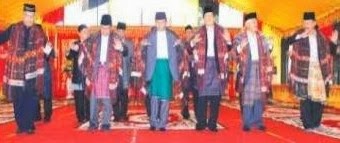
Figure. Naposo Nauli Bulung tortor.

Why is one of the traditional dance called tortor? The answer is not known for certain. Similarly, if the words tortor terms of literal meaning. While the words tortor was not commonly found in the ‘vocabulary’ Mandailing language. But some say that the term ‘tortor’ is used as the name of one of the traditional dance was probably derived from the word "tu tor tor", meaning "from one hill to the other hills", which later changed (abbreviated) to ‘tortor’. In this case, it may be interpreted from another point of view, is not based on a literal meaning. Because it is well known that in Mandailing plateau, especially in the area of ​​Mandailing Julu, there are a lot of office and each has its own name. If you look at the term "tor tu tor" is, also implies that depicts a state or certain things, where from one hill to the other hill like a ‘line’ that down-climb, which is basically similar to one of the movement in ‘tortor’. When the dancers were ‘manortor’, their body looks like ‘up-down’, by bending the legs to the rhythm ‘gondang’ (drums), and also in rhythm with the movement of both hands of each such person being ‘marsomba’ (worship).

As for the other words in the Mandailing language associated with the word ‘tor’, is ‘mangantor’. That is, a situation in which someone has a hand or foot ‘certain vibe’ because hit on other objects, such as wood, but a little bit hard so he felt pain. Thus, with reference to the definition of the word ‘mangantor’ and ‘tu tor tor’, which, when associated with ‘dance moves’ in ‘manortor’, hence the term ‘tortor’ can be interpreted as ‘hand gestures’ of ‘panortor’ (dancer) that ‘vibrate’ or ‘sway’. This is particularly evident when the ‘panortor’ ( which are in the front row) was ‘manortor’, where both hands of each of them ‘panortor’ always wiggle to the music accompaniment (called ‘gondang dua’, ‘gondang topap’, ‘gondang tunggu-tunggu dua’, or ‘gondang boru’). Strictly speaking, ‘hand gesture’ they are always in rhythm (simultaneously) with sound ‘ogung dadaboru’ (gong female) on the first beat and ‘ogung jantan’ (male gong) on beats three, when they're engrossed ‘manortor’.

In any event, there are two groups manortor each person in pairs. The first group lined up in the front row, while the second group is also lined up right behind the first group. The second group is called ‘pangayapi’ or ‘panyembar’, and the first group is called ‘na iayapi" or ‘na isembar’. The first group is at the forefront of this are the people or groups of kinship that is respected by the people who were in the back row (the second group). In accordance with the provisions of Mandailing indigenous communities, there are some type of ‘tortor’ based on the status or social position of the people who ‘manortor’, namely: (1) Tortor Raja Panulusan Bulung; (2) Tortor Raja-raja; (3) Tortor Suhut; (4) Tortor Kahanggi ni Suhut; (5) Tortor Mora; ( 6 ) Tortor Anakboru; (7) Tortor Namorapule, and (8) Tortor Naposo Nauli Bulung.

Implementation Tortor Mora in ceremonial marriage (haroan boru), for example, that ‘manortor’ in the vanguard (the first group, ‘na iayapi’) are the ones that existed as of the parties executing Mora traditional wedding ceremony (called ‘suhut’), while in the back row (the second group, ‘pangayapi’) is ‘suhut’ that when it existed as ‘anak boru. If the Tortor Anak Boru, in the front row (‘na iayapi’) are the ones with the status of implementation of ceremonies as ‘anak boru’ in the marriage customs, then the people who were in the back row (‘pangayapi’) is "anak boru ni anak boru" (anak boru of the anak boru himself, called kijang jorat). In the implementation of these two types tortor, all of whom are men. Yet another case with the implementation Tortor Naposo Nauli Bulung, which is at the forefront (‘na isembar’) is the girl who has the same surname eg Nasution, then in the back row (‘pangayapi’) is the youth who (have to) another example surnamed Lubis, or otherwise the girls in the front row (‘na isembar’) surnamed Nasution, while the rear row (‘panyembar’) must bermarga Lubis, or other clans like Rangkuti, Pulungan, Matondang, Daulae, and Batu Bara. Anyway the young men and women who are in pairs ‘manortor’ it should not have a ‘marga’ (clan ) are the same. Ideally , ‘nauli bulung’ (girls) as a pair ‘naposo bulung’ (youth) is that girls (‘boru tulang’ from ‘mora’ (beehive) young man
.
Figure. Namorapule tortor.

 Movement of the foot between the two groups (‘pangayapi’) and the first group (‘na iayapi’) looks very clearly different when ‘manortor’. The first group (front row) moves to the right or left by moving the tip of the toes that called ‘manyerser’, while the second group (back row) moving in a way step called ‘mangalangka’. If the first group (‘na isembar’) behave like someone who is worshiped (‘marsomba’) when ‘manortor’, while each of the second group (‘panyembar’) behave like ‘alihi’ (eagle) as if he were ‘protecting’ (glorified ) pair - his move toward the left or right side, where both of his "open in front of the chest" under shoulder height, which sometimes ‘roll’ to the left and to the right to follow the direction of movement of the first group (‘na isembar’). In this ‘manortor’ activity, the first ‘panortor’ wich ‘manortor’ in place with the front facing. After that, they move toward the right side, then back toward the front ‘manortor’. Then move toward the left side, and back again to the starting line up, namely ‘manortor’ in place with the front facing. Typically, ‘manortor’ movement to the right and the left were conducted three times, and after that they then formed a new lineup of ‘circular’ and moments later returned to its original formation, then moved again to the right and left side. Further back again to the starting line up, and finally ‘manortor’ activity was over.

Figure. Tolu Saangaran tortor.

Manortor activities in ‘orja siriaon’ (traditional wedding ceremony) and ‘orja siluluton’ (traditional ceremonial demise) using two types ‘gondang’ (music repertoire) are different, ie ‘gondang sabe sabe’ – rapid tempo (called ‘isar’) is used as an appetizer ‘manortor’ activities, and the ‘gondang tortor’ slow tempo (called ‘erer’) used to accompany the next ‘manortor’ activities. When ‘gondang sabe-sabe’ played, in ‘galanggang panortoran’ (special place for ‘manortor’) present a man with a motion ‘sarama’ (‘manyarama’) approached the ‘panortor’ to bring a piece of ‘custom hooks’ (‘abit sende’ or ‘patani’ ) are stretched in both hands. After being in near ‘panortor’, then ‘custom cloth’ is placed on the shoulders of one ‘panortor’. This is done to everyone who will ‘manortor’. Once done to it, then ‘gondang tortor’ played, and follow long after ‘manortor’ activity began. When ‘manortor’ this occurs, a man who acts as ‘panjeir’ which sing a special song for ‘tortor’, ie ‘jeir’. And at the ‘manortor’ activity to be end, the ‘panortor’ always shouting ‘horas’, who then welcomed also by the people who attended had gathered there with a shout of the same word.

Figure. Suhut tortor.

Especially for Tortor Naposo Nauli Bulung, there is one term that is quite important is ‘tolu saanggaran’. That is, the people who ‘manortor’ consists of three girls, each paired with a young man. Once they move toward the right and left, their subsequent formation ‘triangle’. After ‘manortor’ while in that position, then later they returned to the starting line up, they both facing forward. For this Tortor Naposo Nauli Bulung, such a movement cycle is usually repeated three times. Tortor Naposo Nauli Bulung is often called ‘tortor siutur sanggul’ and ‘ranggas na maule-ule’. This ‘tortor’ called as chignon ‘siutur sanggul’ (decoration that is in the heads of the girls) seem always ‘mutur’ (fast twitch) when they 're ‘manortor’, while ‘tortor na maule-ule’ withered movements meant they (the girls) are when ‘manortor’ looked so weak - gracefully, so that likened tub branches are rocking when the wind blows.[EN]


Mandailing Culture (6)

MANDAILING CULTURE: A BRIEF OVERVIEW


6 . Religion

The period before the introduction of Islam to Mandailing, the people who lived there at that time embraced animistic belief system called 'pelebegu' (worship of ancestral spirits). However, information about the belief system 'pelebegu' is now very difficult to obtain because people are always trying to shut down Mandailing if their ancestral religious system was questionable. Circumstances in the past that they see as "the future of black and dark" (called “maso na itom na robi”).

In 1991, I along with Fumi Tamura (ethnomusicologist - Japan) and his friends never audio-visual recording performing arts 'gordang sambilan' in Sayurmaincat, Kotanopan-Mandailing Julu. One of the repertoire (songs) are played when it was the 'gordang sambilan', is 'gondang mamele begu' (rhythm or music to worship ancestral spirits). This suggests that the 'gordang sambilan' position and has an important role in the belief system 'pelebegu' in the past. In this case, Pangaduan Lubis (1986) there is recorded, that "until about the beginning of the 20th century, the rest of the ancient religious systems that still looks scars in people's lives Mandailing though Islam has become a fad evenly Mandailing people. In some places people still do spirit calling ceremony called 'pasusur begu' or 'marsibaso' which is condemned by Islamic clerics. In keeping with the tradition of 'pelebegu', the ceremony performed for the spirits of the ancestors for help to overcome a difficult situation, such as the long dry season rice crop damaging population. People who witnessed the ceremony hard to argue that they did see heavy rain in the middle of a long drought after the completion of the ritual ceremony".


Figure. Gordang Sambilan and Si Baso.

Some people who were old enough in Mandailing no mention two figures are linked to the belief system 'pelebegu', ie 'si  baso' and 'datu'. In the old belief system, 'si baso' is in many ways very much needed by the King and ‘huta’ residents to have communication with the supernatural or ancestral spirits as 'si baso' is a medium that is through a certain ritual can be possessed by ancestral spirits to give instructions to address a wide range of 'reinforcements' (catastrophe) problems are like droughts and infectious diseases are endemic.

Until now, 'datu' position and still have an important role in society Mandailing. 'Datu' known and necessary as the traditional curer (traditional healer) or as a medicine man (shaman to treat). In each 'huta' usually there are some people 'datu': be ‘datu' that can cure some diseases, but there are also datu that lead to specialization cure certain diseases, such as 'datu rasa' specifically to cure people affected by taste (poison); 'datu ipon' is a special shaman heal people who are experiencing dental pain; and 'datu natarsilpuk' is a special shaman to treat people suffering from pain due to sprains or fractures.

In the past, the position and role of 'datu' broader than that described above, as a ‘datu’, among others, to determine the right time and a good time to go down to the fields, harvesting rice, the implementation of the traditional wedding ceremony or to enter a new home. In addition, the ability to predict is necessary to look at the arrival of a disaster or otherwise fortune, and the extraordinary occult was needed to ward off or heal diseases caused by 'witchcraft' (black magic). A 'datu' always be given responsibility to lead the various ceremonies and rituals because he was seen as a ‘treasury’. ‘Datu’ as a companion king has an incredible ability to provide a wide range of traditional wisdom (traditional knowledge as local wisdom) necessary to the perfection of community life 'huta' (‘banua’).


Figure. Gordang Sambilan in Sopo Godang.

The people who live in Mandailing now generally have converted to Islam and have long Islamic scholars trying to scrape out the trust 'pelebegu'. However, among those Mandailing there is still carrying out various traditional ceremonies were very closely associated with the ancient religion, such as rites 'mangupa-upa' (ceremony to call  ‘tondi' ('spirit') in order to evoke the spirit of a person's life ) and 'marpangir'  (‘tradition shampoo) in the river (Batang Gadis) as the influence of the Hindu religion, so that the implementation of such rites are always a source of never-ending debate. [EN]


Selasa, 07 Januari 2014

Dances Mandailing


THE TYPES OF MANDAILING

TRADITIONAL DANCES 

By Edi Nasution*


INTRODUCTION

Ethnic group or Mandailing community has different types of traditional arts as a legacy of the ancestors who passed down the generations from one generation to the next. One is the "traditional dance" which can be classified into three types, namely tortor, sarama, andmoncak, held at various ceremonies and rituals like Haroan Boru and Pabuat Boru (customary marriage), Mambulungi (death ceremony), Sorang ni Danak (birth of a child), Mangido Udan (ask for rain), and others. Various traditional dance Mandailing, especiallytortor and moncak, until now often presented in grand celebrations like Independence Day of the Republic of Indonesia, National Education Day, etc. The three types of traditional dance Mandailing has the basics of beauty (aesthetics), among others: unity, variety, contrast, transition, repetition, sequence (linkage or continuity), balance, climax, and harmony.

When studying the art of dance, the initial question that often arises is why do people dance? In many ethnic groups, participates in dance considered a unifying factor between groups in society. Indeed, there are various reasons why people dance, but many facts showing that dancing has a positive effect because it can improve the quality of life physically (healthy), to build a better mental attitude, and raise the social status.

Since its existence in this world, humans have been dancing. The dance is a form of human expression that can replace the "verbal language" (words) to convey the meanings of life and living in a form of dance movements that although it seems very simple. Social activities such as the "birth" and "marriage" are the two most common reasons for holding a celebration party, which is always present in the implementation performance art of dance. The majority of humanity living on the earth it believes in the entity that "Almighty", God. And the conviction that led to the human desire to communicate with him (God) and hoping to earn God's blessings. The proof, various dances sacred rituals people have practiced for centuries in different parts of the world.

As social beings, humans have made use of dance as a means (medium) to strengthen the relationship among them. In the meantime, why do people dance can be affected by "noise" or music. A baby, for example, when he heard the "ticking" it will respond by moving his legs. Thus, the art of dance we have now is not just a legacy of the ancestors, but it is also our birthright as human beings.

The following section describes the three types of traditional dance Mandailig, whichSarama (Sarama Datu and Sarama Babiat), Moncak, and Tortor.


SARAMA DATU

In a ritual as paturun sibaso (marsibaso) or also called pasusur begu, Sarama dance accompanied by music ensemble Gordang Sambilan, while the dancers one calledSibaso, Shaman is a character in the old religious Mandailing called Sipelebegu. In the past, the ritual ceremony held paturun sibaso when a major disaster occurs huta or banua outbreaks of diseases like cholera, and the dry season or a prolonged rainy season otherwise disrupting agricultural activities of local residents, which will eventually lead to starvation because the endless supply of rice as their staple food. To cope with bala na godang (major disaster), they ask for help begu, ie the spirits of the ancestors, through the intercession Sibaso because they believed that this was previously only sibaso can communicate with begu. In the past paturun sibaso rituals performed in alternating experiences (courtyard) of Bagas Godang (king's palace), which was attended by Raja(King), Namora Natoras, Si Tuan Najaji (local residents), and a supernatural character named Datu a very large role, especially for leading the implementation of the rituals. At that time, datu seen as "treasury" because it has a wide range of traditional knowledge (traditional wisdom) which is needed for the perfection of life huta or banua community.

In paturun sibaso ritual reserved for special meals sibaso, ie parlaslas, are laid out on a tray containing among others: garing (jurung fish) were burned and pege (a plant that has a spicy flavor), sira (salt) and ngiro (sap water) in tanduk ni orbo (container made of buffalo horn). After gordang sambilan sounded odd to play rhythm gondang (music repertoire) specifically named Mamele Begu, Sibaso was dancing and then experienced trance. In this trance, Sibaso asked to eat and drink. After eating and drinking, Sibasoback dancing. Not long after, the datu came Sibaso to notify the host of an event bala na godang (major disaster) that has engulfed the population, and appealed to sibaso so willing to ask what is the cause and what's the solution to begu because people are no longer able to cope. After that, Sibaso tell what causes and how to cope with the great calamity to the datu. After that, sibaso had fallen and was unconscious (fainting). Moments later he regained consciousness as before, the situation before the ritual begins.


SARAMA BABIAT

Tigers that live and thrive in the dense forests, called babiat, for Mandailing very important because in addition to having tremendous strength physically, apparently babiat also believed to have their own customs. People who have a clan Rangkuti and Parinduri who settled in the region Maga, which is the border between Mandailing Godang andMandailing Julu, believing that their first ancestor is the "incarnation" of the tiger. They and other Mandailing people generally taboo to mention tigers babiat name because it was considered unethical. Therefore tiger called by specific names such as "Rajai" (king we were), "ompungi" (our grandfather's), "namaradati" (a habitual it), and "nagogoi" (strong's). So do not be surprised if people surnamed Rangkuti seen as "those who feared", which translates from his clan name consisting of two words, namely "rang" (people) and "kuti" (the dreaded).

The names of the name for the tiger is one of the great diversity of languages Mandailing, namely hata parkapur, specifically their use while in the woods to look for mothballs, is one of the important commodity traded in the past. And even now in the midst of the community still alive oral stories about "people first" is considered "magic" can ride a tiger to visit areas far away from the settlements.

Wherever there is a tiger who came to close to the settlements, the locals will try to throw in order to go back into the woods by sounding Gondang Dua (Gondang Topap) ensamble. But there are also babiat who do not want to go back to their habitat and always disturb the tranquility of the population by feeding their pet livestock such as goats and cattle, so that they are forced to hunt and kill him together. After the tiger died, and was brought to the field to perform a traditional ceremony because the tiger is also considered to have a custom. In this ceremony, Gordang Sambilan dan Gondang Dua is played, and in the middle of the field a (male), namely Sibaso, seemed to dance with movements that resembles a tiger that was raging because of the pain. Dance like this called manyarama, accompanied by gondang (music repertoire) specifically named Sarama Babiat. In the 1970's, an event like this ever happened in Mandailing Julu and witnessed by many people, young and old, male and female. The traditional ceremony held in Singengu, which is located not far from the Pasar Kotanopan.


MONCAK

Pencak silat in Mandailing called Moncak, but sometimes also called “cilek” which means "silat". Both in Mandailing Godang and Mandailing Julu enough arts colleges. In the area of Batang Natal (Mandailing Godang) there is a well-known arts colleges for teachers and students are tough players and great arts with deadly moves. They were trained by the master in a place called Dolok Sigantang. That is why they are called Parsigantang and name moves silatnya also called Sigantang.

While in Mandailing Julu there were many arts college. Two of them are quite famous arts college that is in Saba Garabak (Huta Pungkut Jae) and Muara Pungkut. In addition marmoncak (playing pencak silat) with his bare hands, the students who studied martial arts in Saba Garabak also use podang (sword) and oris (dagger). While pencak silatcollege in the Muara Pungkut quite famous also because the students are taught a specialpencak silat moves called Linto (meaning "leech"), in which the movements of their feet while playing martial arts much like leeches. In addition, students from both universities will also learn pencak silat of mysticism, which is "aji-aji" (“jampi-jampi”) specific, a "practiced" in a game or fight to defeat the opponent.


TORTOR

If we look at the natural environment of the area Mandailing, in the north there is a fairly extensive lowland rice cultivation by the local population, while in the south is generally hilly areas (the Highlands), is part of the Bukit Barisan existing along the island of Sumatra. There a hill called tor, and hills that they named, like Tor Sijanggut in Huta Pungkut andTor Siojo the west of Pasar Kotanopan. The valleys (lowland) of Tor Siojo call is a fairly extensive rice fields and in certain areas used as residential places by the locals. As Aek Kapesong, Ranggasoli, Jambur Tarutung, Sindang Laya and Sawahan, these settlements are classified banjar.

Their size and population density, settlements in Mandailing ranging from the smallest known pagaran, greater than pagaran called banjar, and greater than row called lumban. All these types of settlements are included in a single region called huta or banua. In Mandailing, each huta union territory has its own and has its own system of government (autonomous) under the leadership of Namora Natoras headed by a king, Raja Pamusuk. While a combination of several huta, each of which originally came from and sanctionedhuta induk (mother village) with a "partnership law" (adattrechts gemeenschap, Mandailing terms in the language is an Janjian). A combination of some huta orbanua was also led by Namora Natoras but headed by a monarch who holds Raja Panusunan Bulung. In the past, a combination of some huta or banua headed by Raja Panusunan Bulung, is "small empire" are quite numerous in Mandailing, both in the region Mandailing Godang and Mandailing Julu.

Mandailing tribal social system has called Dalian Na Tolo (three pedestal), who devote their lives to the three kinship groups, namely functional kinship mora, kahanggi, andanakboru. In this case, the mora is "the party that gives girls" and instead anakboru is "receiving party girls", while kahanggi are people who have the same clan (also calledsisolkot) because they come from one Ompu persadaan (ancestors) are the same. As clan Nasution has Ompu parsadaan named Si Baroar, and Namora Pande Bosi isOmpu parsadaan from people who have Lubis clan in Mandailing.

Besides having a patterned system of kinship by embracing the lineage withdrawal by the father (patrilineal), in the community are also Mandailing stratification (coating) that goes social for generations in three layers. First, Namora-mora is the nobility. Second, Alak Na Jaji or Si Tuan na Jaji was the most ordinary people. Third, hatoban or partangga buluare slaves. Those who belong to hatoban caused by several things, among others, for failing to pay debts, deliberately purchased to be mastered, and defeat (losing) the war. However, in some huta and Janjian there is one more layer called natoras-toras, are community leaders (the intelligentsia) who are not status as nobility (Namora-mora), nor the common people (Alak na Jaji). The nobility in Mandailing easily recognizable because they hold the title of Raja, Sutan, Mangaraja, and Baginda. In addition, residence (home) they called bagas na marbolang or bagas na martanduk as decorated with traditional ornaments typical, so it appears clearly different from ordinary people's homes in a huta.

Dance called tortor have a very close relationship with all the ancient religious systems Mandailing, namely Sipelebegu. This is indicated by the presence of a traditional expression (term), ie "somba do mulo ni tortor", which literally means "tortor origin is worship". In this case, somba (worship) or targeted offerings to the spirits of ancestors (begu) believed to have supernatural powers and great influence on various aspects of their lives. In the past, the spirits of the ancestors (begu) is believed to be that resides in certain places in the woods (naborgo-borgo), in the mountains, tor (hills), large trees, and so on. However, Sipelebegu religious system is now not much more is known by people Mandailing own, especially more so since most people Mandailing have long embraced Islam and discard old belief because contrary to the teachings of their religion. Likewise, ancient beliefs are still leaving traces, such as the Sipelebegu terms, phrases "somba do mulo ni tortor", statues or sculpture made of stone or wood named tagor and sangkalon, repertoire of music in ritual pasusur begu named gondang mamele begu, etc.

Why one of their traditional dance is called tortor? The answer is not known for certain. Similarly, if the terms of tortor words literally. While the word "tortor" was not commonly found in the "vocabulary" Mandailing language. But some say that the term "tortor" used as the name of one of the traditional dance was probably derived from the word "tor tu tor", which means "from one hill to the other hills", which later changed (abbreviated) to "tortor". In this case, it may be interpreted from another point of view, is not based on a literal meaning. Since it is well known that in the highlands Mandailing, especially in the area of Mandailing Julu, there are a lot of tor and each has its own name. If we look at the term "tor tu tor", also may contain terms that describe a situation or certain things, where from hill to hill another look like a "line" up and down, take the form of "equilateral triangles" lined up, which is basically similar to a movement in tortor. When the dancers were manortor(tortor dance), their body looks like "up and down", by bending the legs to the rhythmgondang (drum), and also in tune with the movement of both hands of each such person being marsomba (worship).

As for the other words in the language Mandailing associated with the word "tor", is "mangantor". That is, a situation in which a person's hands or feet had "specific vibration" because struck on other objects, such as wood, but it is rather hard bit so he feels pain. Thus, with reference to the sense of the word "mangantor" and "tor tu tor", which when linked to the "dance moves" in manortor, hence the term "tortor" can be interpreted as a "gesture" of panortor (dancer) that "vibrate" or "be move". This was evident when thepanortor (who are on the front row) was manortor, where both hands of each of thempanortor always wiggle to the music accompaniment (called gondang dua, gondang topap, gondang tunggu-tunggu dua, or gondang boru). Strictly speaking, "hand gesture" they are always in tune (along) with sound ogung dadaboru (gong female) on the first beat and ogung jantan (male gong) on the third knock, when they were manortor.

In any event, there are two groups manortor each one pairs. The first group lined up in the front row, while the second group is also lined up right behind the first group. The second group is called "pangayapi" or "panyembar", and the first group is called "na iayapi" or "na isembar". The first group who were in the forefront of this is the people or kinship group which was respected by the people who were in the back row (the second group). In accordance with customary Mandailing community, there are some types of tortor based on the status or social position of the people who manortoryaitu: (1) Tortor Raja Panulusan Bulung, (2) Tortor Raja-Raja, (3) Tortor Suhut, (4) Tortor Kahanggi Suhut, (5) Tortor Mora, (6) Tortor Anakboru, (7) Tortor Namorapule, and (8) Tortor Naposo Nauli Bulung.

Tortor Mora in ceremonial marriage (Haroan Boru), for example, that manortor in the vanguard (the first group, na iayapi) are the ones that existed as of the mora conducting marriage ceremonies (called Suhut), while in the back row (the second group, pangayapi) is Suhut when it existed as Anakboru. If the Tortor Anakboru, at the forefront (na iayapi) are the ones that existed as Anakboru in traditional wedding, then the people who were in the back row (pangayapi) is "Anakboru ni Anakboru " (Anakboru of Anakboru it himself) called Kijang Jorat. In the implementation of these two types tortor, all of whom are men. Yet another case with the implementation tortor Naposo Nauli Bulung, which in the forefront (na isembar) is the girl who has the same surname as Nasution, then in the back row (pangayapi) is the youth who (had) another example surnamed Lubis, or otherwise the girls in the front row (na isembar) surnamed Nasution, while the front rear (panyembar) should Lubis clan, or other clans like Rangkuti, Pulungan, Matondang,Daulae, and Batubara. Anyway the young men and women are paired manortor should not have a clan of the same. Ideally, Nauli bulung (girls) as a pair naposo bulung (youth) are girls from mora (or tulang) of the young man called boru tulang.

Movement of the foot between the two groups (pangayapi) and the first group (na iayapi) so apparently different when manortor. The first group (front row) moves to the right or left by moving the tip of their toes called manyerser, whereas the second group (back row) moving in a way to step called mangalangka. If the first group (na isembar) behave like someone who is worshiped (marsomba) when manortor, while each person from the second group (panyembar) behave like alihi (eagle) as if it were "protecting" (glorified) partner move toward the left or the right, where both of his "open chest" in height below the shoulder, sometimes "shaky" to the left and to the right to follow the direction of movement of the first group (na isembar). In manortor activity, the panortor will manortor in place with the front facing. After that, they move to the right side, then back manortor forward. Then move to the left side, and back again to the initial formation, ie manortor in place with the front facing. Typically, the movement toward manortor right and left are performed three times, and after that they then formed a new lineup of "circular" and moments later returned to its original formation, then moved again to the right and left side. Further back to the initial formation, and finally manortor activity was over.

Manortor activities in Orja Siriaon (marriage ceremonies) and Orja Siluluton (death ceremony) using two types of gondang (music repertoire) are different, ie gondang sabe-sabe with upbeat (isar) is used as the "opener" manortor activities and gondang tortorthe slow tempo (erer) used to accompany manortor activity next. When gondang sabe sabe played, in galanggang panortoran (a special place for manortor) comes a man with a motion sarama (manyarama) panortor approached carrying a "custom hooks" (abit sende or patani), which stretched on his hands. After being in near panortor, then "custom cloth" is placed on the shoulders of one panortor. This is done to all those who willmanortor. Once done to it, then gondang tortor played, and soon follow manortor activity began. When manortor this occurs, a man who acts as panjeir sing a special song fortortor, namely jeir. And at the end manortor, the panortor always shouting horas, which also welcomed by those in attendance gathered to shout the same word.

Here are written some poetry or lyrics strands of ende (songs) that called Jeir. Ende is sung by Abdul Hakim Lubis (Jatumaya) when implementing traditional wedding ceremony in Maga Lombang in 1991.

J E I R

o … santabi sapulu baya noli santabi laung
o … di boru ni ayu ara na godang parsilaungan
o … tortor muyu on tortor maroban domu dohot haratan
o … hamu na opat dimanjujung i mada 
o … panortor ni boru na mora habang dongan so tarboto-boto mai
o … na songgop so tarbege-bege boti
o … ayu ara na godang parsilaungan 
o … tortor muyu nian na borkat maroban holong dohot domu
o … amu na tolu simanjujung 
o … santabi sapulu dongan noli santabi baya
o … di boru ni ayu ara na godang parsilaungan
on mada dongan ibana tortor ni ale nauli bulung do
on di napa-napa boti i tano Maga Lombang on Gunung Marapi do na martua 

o … banua ni Raja Panusunan Bulung na sakti on do
o … Mangaraja Bangun dongan Pandapotan panyundut i
o … suang songon parhabang na ni dongan sitamba laut do
o … tortor ni boru na mora
o … na mora amu na tolu
o … simanjujung 
o … manortor margindar dongan tolu da sanggar an ma
o … mangadopkon raja-raja humaliang humalogo
o … na tolu simanjujung 
o … na suang songon parpusuk ni maldo boti di dolok do
o … tortor ni boru na mora di luat ale tano Maga
o … ayu ara na godang parsilaungan
o … adiankon jolo le somba on laos tu pudi baya
o … marsomba ho inang tu siamun dohot somba tu siambirang ale
o … so horas ko nian da na manortor boru suti

o … na jongjong mada opat boti saanggaran samo ginjang samo godang do
o … di ulu nai da baya naso marrongit do bagas godang na martua do
o … banir na bolak parkolipan
o … ulang kamu maila dina manortor palontik tangan
o … siambirang 
o … ulang kamu tolu dongan bajora boru rangkuti baya
o … na di pudi do bayo jambu dongan na mongkol Maga baya
o … i ma bayo dongan na sakti on tarmauk na tarbonggal
o … di luat ni Mandailing on o … boru rangkuti i mada … 

Horas ... horas ... horas ...

Especially for tortor Naposo Nauli Bulung, there is one term that is quite important: "tolu saanggaran". That is, the people who manortor consists of three girls, each paired with a young man. Once they move to the right and left side, then their formation "triangle". Aftermanortor some time in that position, then later they returned to the initial formation, they both facing forward. To tortor Naposo Nauli Bulung, the cycle is usually repeated gestures like three times. Tortor Naposo Nauli Bulung is often called Tortor Siutur Sanggul and tortor Ranggas Namaule-ule. Called Tortor Siutur Sanggul (decoration that is in the heads of the girls) seem to be always "mutur" (moving quickly) when they'remanortor, while tortor Sanggar Namaule-ule movements meant they (the girls) are whenmanortor looked so weak-grace of so likened branches like a rock when the wind blows.


EPILOG

Many facts show that humans have specialized neurons for processing music (Ayotte et al, 2002; Johnsrude et al, 2000; Peretz, 1996; Peretz and Morais, 1993; Perry et al, 1999), but still little evidence of such a to a combination of two arts, the "music and dance". Human beings, according to Edward H. Hagen and Gregory A. Bryant (2009), are unique among primates in their ability to form cooperative alliances between groups in society despite the absence of a relationship "partnership". It is likely that a unique form of human social organization based on music and dance. Music and dance may have evolved as a coalition signaling system that serves as a useful means of communication and at the same time to improve the quality of the coalition itself, so allow for meaningful partnerships among groups that exist in a community or ethnic group.

In the lives of people to communicate with three basic channels, namely language, music, and dance. Language (words) that we use in conversation is the basis of all human communication. In this case, the "words" is a "small packets of meaning" which is then formed into a "sentence" that allows human beings to communicate by connecting to each other. As we know that there are words that are neutral such as "street", "cold", and "sculpture", but other than that there are words that are emotional as "sad", "fall in love" and "happy". Having regard to the words that are emotional and then interpret, particularly with regard to the context in which those words are used, it can help us to understand the emotions of human beings. However, studies that have been done indicate that the "words" in communication can only explain about 10%. Examples such as "love letters", is a form of human communication are quite "poor".

Unlike verbal language ("words") man, "music" talk to "tonal languages" such as pitch, rhythm, melody, and so on. Human emotion can be heard and felt strong in music, as well as emotional conditions such as a sense of happiness and excitement can be clearly detected in the music. Research shows that 30 to 40% of communication is through music, which is clearly far more than through "words" only.

Higher frequency of the (music) that the communication is "body language" (dance), which reached almost 50%. But the body language (dance) is very delicate and easily misunderstood its meaning by the viewer. Dance is the language of the most difficult for people to control, as there are hundreds of muscles in the human body, many of which are beyond the control of the human consciousness. Still, the dance may be the most reliable indicator to know and understand what is actually thinking and feeling human beings. To get to the "point" is a complete and comprehensive understanding, then we must examine the cultural context of the dance in the dance owners themselves holistically. Really, there is no other way.

Cileungsi, March 13, 2012
_________________
*ethnomusicologist

Entri Populer

Total Tayangan Halaman